Green Operations
Net Zero
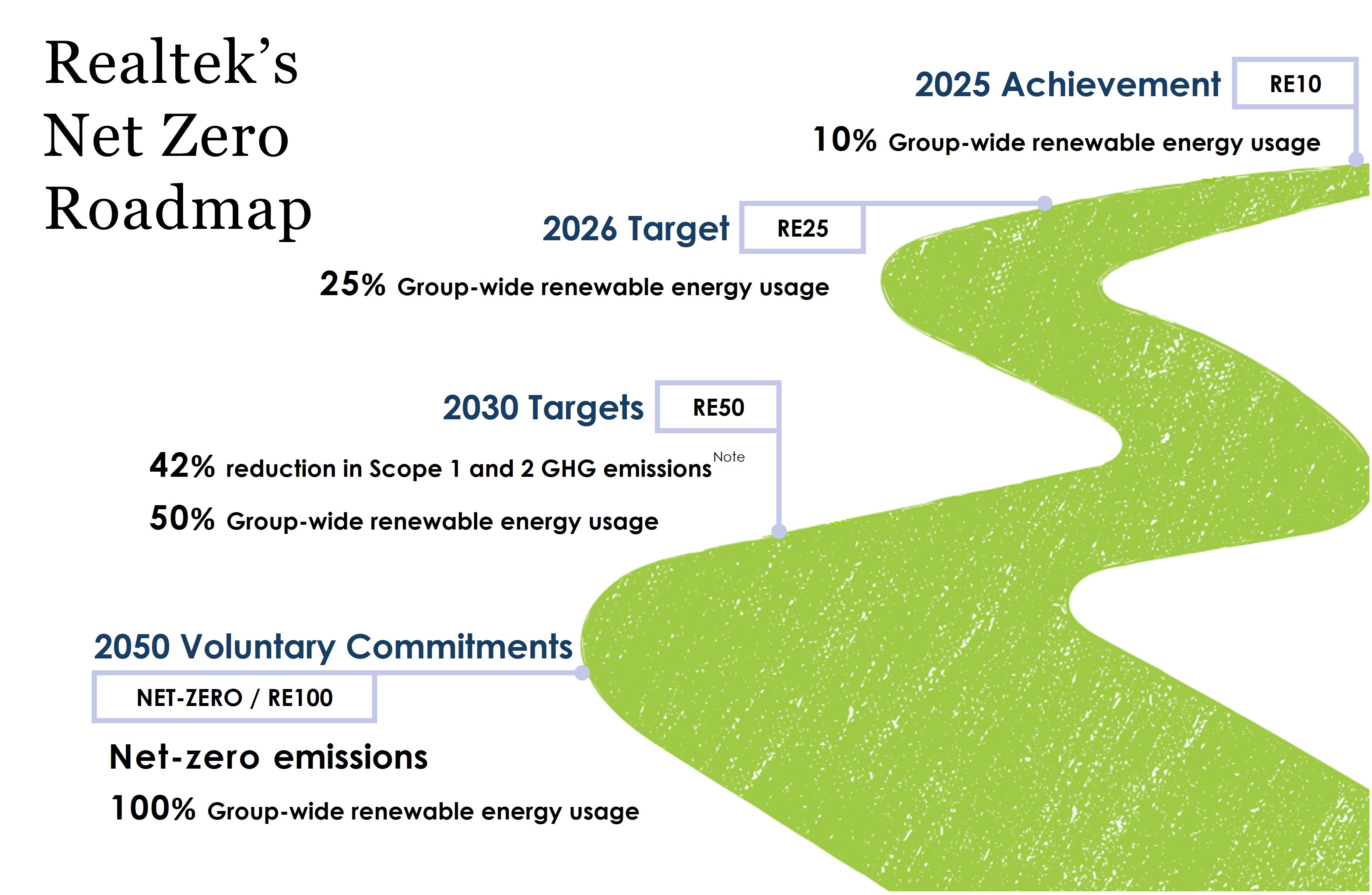
Realtek responds to the Global Net Zero Initiative, and voluntarily commits to achieving Net Zero Emissions by 2050.
Climate change is a critical challenge for sustainable enterprise development. Realtek is dedicated to understanding and addressing the potential impacts of climate change, establishing relevant management policies and response plans.
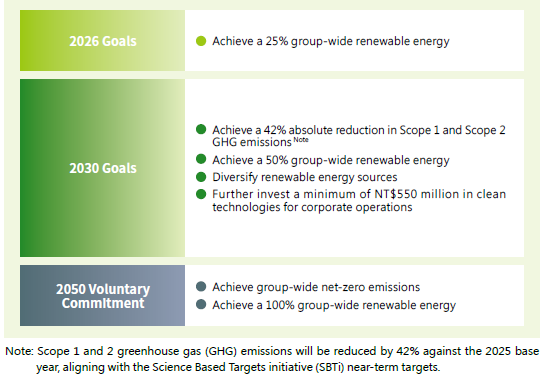
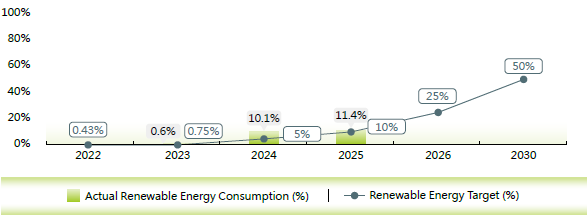
To mitigate the climate crisis caused by greenhouse gas emissions and actively support international net-zero initiatives, Realtek has voluntarily committed to achieving net zero carbon emissions and 100% renewable energy by 2050. To achieve this ultimate goal, we plan to increase the proportion of renewable energy used across the Group to 25% by 2026, and by 2030 to achieve a 42% reduction in Scope 1 and Scope 2 emissions and increase the share of renewable energy to 50%. Our strategy includes a range of energy-saving and carbon-reduction measures, such as:
- Developing low-carbon products
- Improving equipment energy efficiency
- Constructing and certifying office buildings to green building standards
- Increasing the use of renewable energy
- Implementing Management by Objective (MBO) for supply chain carbon reduction
Realtek Net-Zero Roadmap
Green Operations:Strategy & Goal
Short-term (1 year)
◆ Achieve a total installed solar power generation capacity of 1,645 kW at operational sites in Taiwan by 2026
◆ Increase the group-wide renewable energy share to 25% by 2026
◆ Achieve an annual electricity savings rate of over 6%
◆ Reduce per capita water withdrawal by 1% compared to the previous year
◆ Achieve a facility water conservation rate of no lower than 6%
◆ Ensure the recycling rate of scrap ICs and wafers is at least 90%
◆ Limit general industrial waste intensity at no more than 27 kg per NT$100 million in revenue
◆ Obtain the Science Based Targets initiative (SBTi) target validation
Medium- to long-term (2-10 years)
◆ Achieve a 50% group-wide renewable energy share by 2030
◆ Reduce Scope 1 and Scope 2 GHG emissions by 42% by 2030 Note
◆ Meet annual carbon reduction targets in accordance with SBTi requirements
◆ Continue implementing renewable energy generation projects
◆ Continue to expand green electricity procurement
◆ Continue to monitor and manage carbon emissions by reviewing and implementing measures across six major energy conservation directions
Note: Scope 1 and Scope 2 greenhouse gas (GHG) emissions will be reduced by 42% compared to the 2025 base year
Sustainability Contribution in 2025
◆ Reached a total solar installed capacity of 1,549 kW at the operational sites in Taiwan, successfully achieving the installation target
◆ Achieved a cumulative electricity savings rate of 22.2%
◆ Achieved a water conservation rate of 8.52%
◆ Achieved a 100% recycling rate for scrap IC and wafers
◆ Invested over NT$200 million in clean technology for corporate operations
Climate Change Management
Governance
Realtek consistently monitors and tracks international trends, customer needs, and government-issued climate-related information. To effectively manage the potential operational impacts of climate change and sustainable supply chain issues, the Sustainability Task Force convenes regular cross-departmental meetings to discuss critical climate-related topics. In addition, it continuously reviews, evaluates, and optimizes Realtek's climate and sustainability governance policies. The Board of Directors serves as the highest supervisory and decision-making authority for Realtek's climate governance. A Board-level Sustainable Development Committee has been established to report to the Board on a quarterly basis. The Sustainability Task Force acts as the highest executive body, with its Head reporting the status of sustainability implementation to the Sustainable Development Committee every quarter. Comprising cross-functional representatives, the Sustainability Task Force leverages interdepartmental coordination and regular meetings to track global trends in climate action and execute TCFD risk assessment processes. All information regarding climate-related events and their identification results is fully disclosed in this ESG Report. Upon its completion, the report is submitted to the President for review and subsequently to the Board for approval prior to public release. This ensures that the Company's strategies for addressing climate change challenges are continuously refined and backed by the highest governance level.
In accordance with the global warming scenarios provided by the UN Intergovernmental Panel on Climate Change (IPCC), Realtek identifies climate-related transition risks and physical risks driven by extreme weather events, and quantifies their potential financial impacts. The Company then formulates corresponding adaptation and mitigation strategies to ensure dynamic monitoring and the effective execution of all initiatives. In addition, the responsible units convene weekly energy conservation meetings to track progress and submit monthly reports to senior management regarding energy and greenhouse gas (GHG) inventory initiatives. On a quarterly basis, the implementation statis and verification schedules of the GHG inventory are reported to the Board. Other climate-related action plans, such as the progress of carbon reduction initiatives, renewable energy installations or green power procurement, are reported to the Board in the fourth quarter of each year. This structured reporting mechanism ensures effective communication and robust governance across all organizational levels of the Company. Realtek has also long integrated environmental awareness and education into its new employee orientation programs. To further deepen environmental management awareness, starting in 2026, annual environmental training courses will be mandated for all employees, including contracted personnel. These courses will cover topics such as climate change management, environmental policies, energy conservation measures, and water resource management, thereby comprehensively elevating environmental protection awareness of the entire workforce.
- Climate Change Governance Framework

Strategy
Realtek regularly discusses and evaluates climate-related issues in the Sustainable Development Committee meetings. With reference to the “Shared Socio-Economic Pathways (SSP)” methodology proposed in the Sixth Assessment Report (AR6) by the UN's Intergovernmental Panel on Climate Change (IPCC), the Company conducts scenario analyses under three climate scenarios: SSP1-1.9 Note 1, SSP2-4.5 Note 2, and SSP5-8.5 Note 3. Based on the results of the climate scenario analysis, Realtek selects SSP1-1.9 to evaluate the impact of climate change on its overall operations under the ideal scenario where temperature rise is limited to 1.5° C. The Company clarifies existing measures, response options, as well as the form, feasibility and sources of obtaining quantified financial impact data, to compile the climaterelated risks and opportunities that may affect Realtek. Furthermore, in accordance with the TCFD framework, the Company identifies climate-related transition risks, physical risks, and opportunities, and analyzes issues related to Realtek's operations. The potential impacts, opportunities, financial impacts and response strategies for climate-related transition risks (regulatory requirements, changes in market preferences) and physical risks (supply disruptions, increased severity of extreme climate events, rising average temperatures, changes in rainfall patterns and climate patterns, rising sea levels) are summarized in the table below. The main operational sites covered by these response measures include Office 1, Office 2, and Office 3 in the Hsinchu Science Park, as well as the offices in Taipei and Tainan.
Note:
- Equivalent to a scenario where the temperature increase is limited to below 1.5° C.
- Equivalent to a scenario where the temperature increase is limited to below 2° C.
- Equivalent to scenarios with a temperature increase exceeding 1.8° C and 3.4° C.
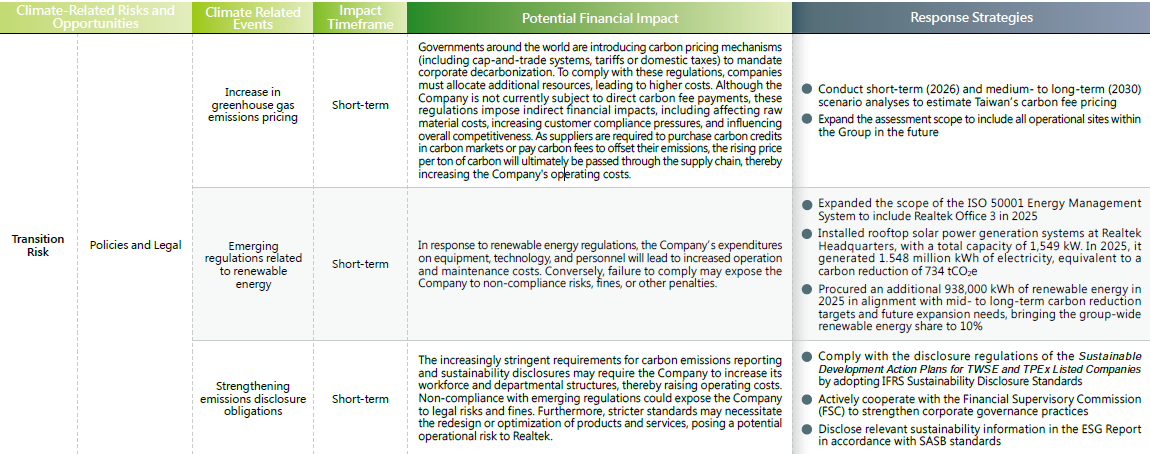
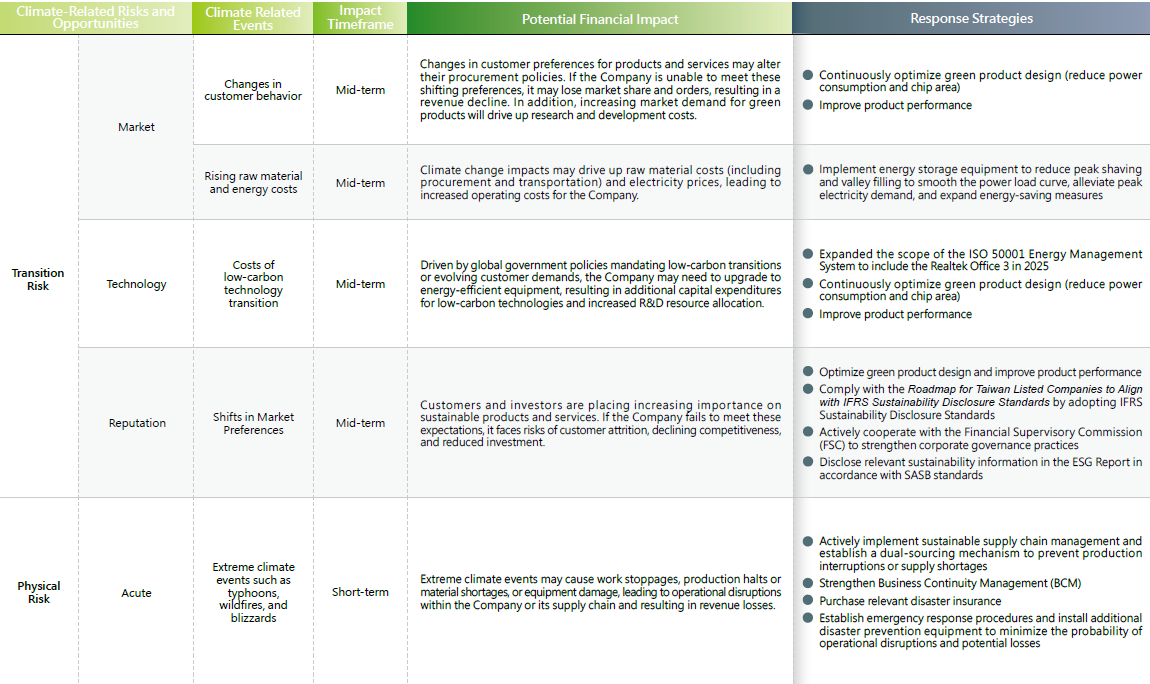
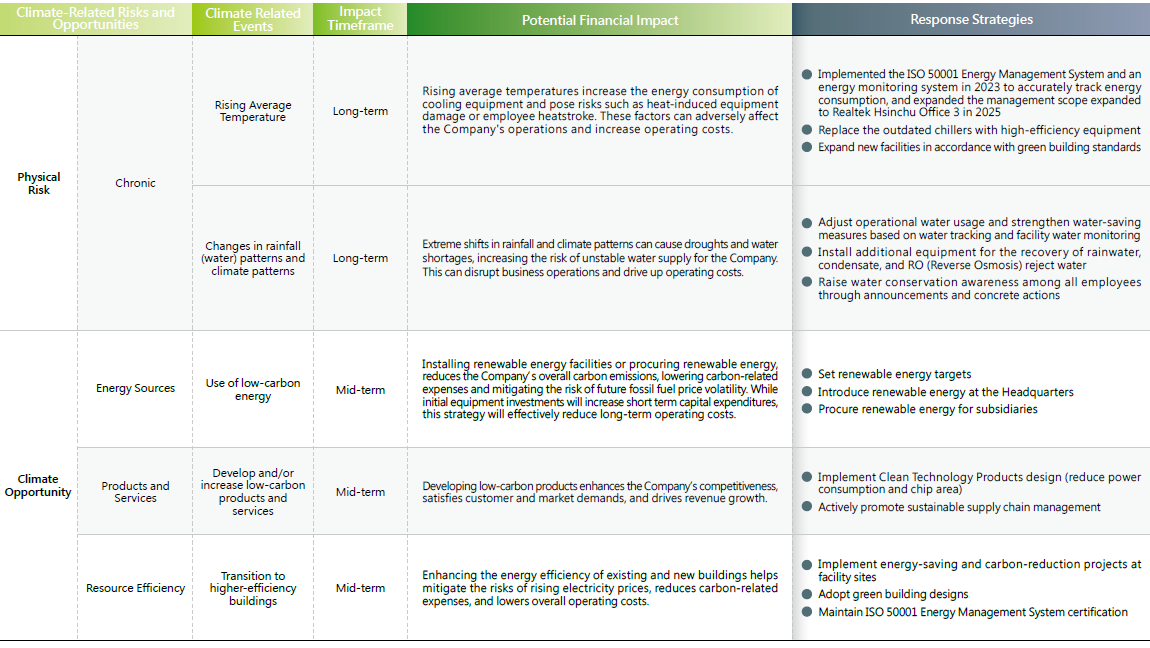
- The Financial Impact of Climate Change
To support the global goal of limiting global warming to 1.5 ℃ , Realtek has formulated and implemented a series of strategic objectives based on the scenario analysis of climate-related risks and opportunities. These strategies include promoting energy saving measures, installing solar power generation facilities, implementing sustainable supply chain management, adopting energy management systems, and planning facility expansions in accordance with green building standards. The Company further evaluated the potential financial impacts of these strategies. The assessment encompassed increased airconditioning expenses, transition costs for upstream suppliers, capital expenditures for solar facilities and green buildings, as well as operational expenses for sustainability management and communication.
Through quantitative assessment of the potential increases in expenses and management costs driven by various climate-related issues across the short, medium, and long term, the potential financial impacts were determined to be less than 1% of net revenue. In 2025, Realtek initiated an implementation plan adopting science-based assessment methodologies to deepen existing climate risk management mechanisms, further quantify related financial impacts, and enhance the maturity of climate-related disclosures. In alignment with the Roadmap for Taiwan Listed Companies to Align with IFRS Sustainability Disclosure Standards issued by the Financial Supervisory Commission (FSC), Realtek is categorized as a Phase II entity (paid-in capital of NT$5 billion to NT$10 billion). Consequently, the Company expects to disclose its 2027 sustainability information in 2028, prepared in accordance with the IFRS Sustainability Disclosure Standards. This information will be integrated into a dedicated sustainability chapter within the annual report, at which time the related quantified financial impacts will be disclosed.
Risk Management
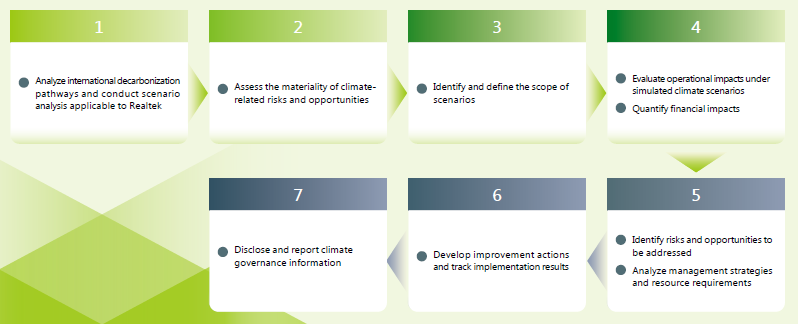
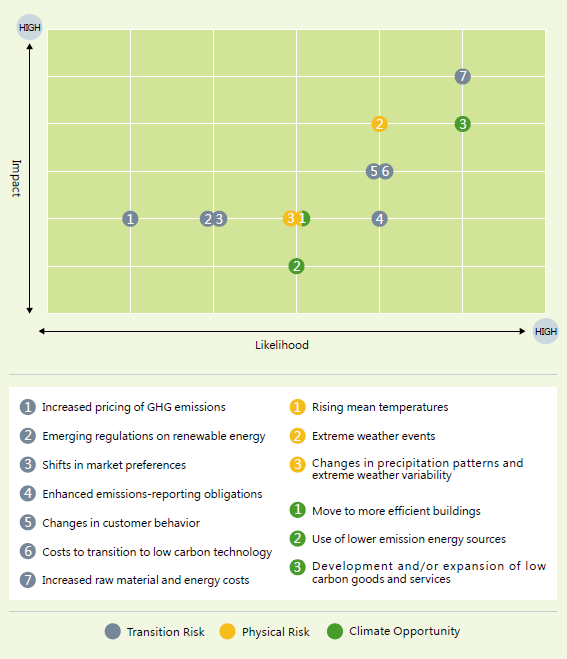
In its 2025 assessment of climate-related risks and opportunities, Realtek defined the short-term timeframe as 2026, medium-term timeframe as 2027 to 2029 and the long-term as 2030 to 2035. Biennially, based on the 1.5℃ global warming scenario proposed by the IPCC Sixth Assessment Report (AR6), the Company evaluates the correlation between its business development strategies and climaterelated issues. This process identifies the potential impact and likelihood of occurrence for climate-related risks and opportunities on operations. Realtek then reviews its climate risk and opportunity matrix to formulate corresponding response strategies.
The Board of Directors serves as the highest governance body overseeing both Realtek's climate-related risk management and its overall risk management systems. Considering that these two systems are currently operated by distinct units, and in response to the Roadmap for Taiwan Listed Companies to Align with IFRS Sustainability Disclosure Standards issued by the Financial Supervisory Commission (FSC), Realtek has initiated an IFRS adoption project and is progressively planning mechanisms for risk integration. Moving forward, the Company will establish cross-functional communication workflows; when the Sustainability Task Force identifies climate risks with significant financial impacts, the assessment results will be incorporated into the overall risk management framework. Furthermore, in alignment with the IFRS Sustainability Disclosure Standards, Realtek will conduct annual disclosures on governance, strategy, risk management, and metrics and targets for material sustainability- and climate-related risks and opportunities that may affect the Company's outlook.
- Climate-Related Risk Identification and Management Procedure
- Climate-Related Risk and Opportunity Matrix
Metrics and Targets
Within the Company's corporate sustainability strategy, addressing climate change is a critical priority. Realtek continuously monitors and identifies the potential impacts and risks that climate change may pose to its operations, formulating corresponding management policies and response plans. To mitigate environmental impacts and proactively respond to international sustainability initiatives, Realtek has committed to the major goal of achieving net-zero carbon emissions by 2050. This target aligns with the Net-Zero Pathway White Paper published by the Taiwan Semiconductor Industry Association (TSIA), of which Realtek is a member. Furthermore, the Company has set ambitious renewable energy targets, planning for the entire Group to reach a 50% renewable energy by 2030, and making a voluntary commitment to achieve a 100% renewable energy by 2050. While continuing to develop low-carbon products, Realtek plans to enhance investments in clean technology for its operations. The Company is gradually reducing carbon emissions through the following actions: optimizing operational processes and equipment automation, constructing and certifying green office buildings, increasing the proportion of alternative energy, strengthening waste management and pollution prevention, enhancing water resource sustainability, and implementing emission reduction target management across its supply chain.
Incentive Measures
|
Level |
Incentive Measures |
KPI Metrics |
|
President |
Incorporate overall climate change management targets into performance evaluation metrics, serving as the basis for salary adjustments and bonus assessments. |
- Reduce corporate greenhouse gas emissions - Increase renewable energy utilization - Enhance energy efficiency - Strengthen corporate energy-saving and carbon-reduction measures - Green product innovation and research & development (R&D) - Establish green supply chain |
|
Top-Level Managers |
Incorporate climate change management targets related to job responsibilities into performance evaluation metrics, serving as the basis for salary adjustments and bonus assessments. |
|
|
Middle- / First-Line Managers and Non-Managerial Roles |
Incorporate climate change management targets related to job responsibilities into performance evaluation metrics, serving as the basis for salary adjustments, bonus incentives, and promotion evaluations. |
GHG Management
Base Year Update
Greenhouse gas (GHG) emissions are the primary driver of climate change. Realtek initiated voluntary GHG inventories and management at its Hsinchu operational sites in 2019. Given the expansion of the 2025 GHG inventory boundary to include Biomedical Office 1 as well as the offices in Germany and India, which resulted in an increased inventory scope and higher emissions, the Company has designated 2025 as its new base year. This will also serve as the base year for its SBTi target submission. In compliance with the requirements of the Financial Supervisory Commission (FSC) and the Science Based Targets initiative (SBTi), the 2025 GHG inventory was conducted in accordance with the GHG Protocol standards and obtained third-party verification. The inventory boundary covered 19 group-wide operational sites (6 in Taiwan and 13 overseas), ensuring comprehensive accounting of Scope 1, 2, and 3 emissions. Scope 3 encompasses processes such as upstream wafer manufacturing and backend packaging and testing. By integrating product sales-related information with the Enterprise Resource Planning (ERP) system, Realtek automates the generation of GHG emission activity data.
GHG Emissions
In 2025, Realtek's total greenhouse gas emissions amounted to 21,942,238.9512 tCO2e. Direct Emissions (Scope 1, Category 1) accounted for 3,829.5346 tCO2e, or 0.02% of the total. These emissions originated from stationary sources (diesel for emergency generators), mobile sources (gasoline for company vehicles), and fugitive sources (refrigerants, septic tanks, and fire extinguishers). As Realtek has no manufacturing processes, there were no process emissions. Energy indirect emissions (Scope 2, Category 2) totaled 31,511.0578 tCO2e, derived primarily from purchased electricity, accounting for 0.14% of total emissions. Other indirect emissions (Scope 3, Categories 3, 4 and 5) amounted to 21,906,898.3589 tCO2e, representing 99.84% of the total. Within Scope 3 emissions, Category 11 (ISO Category 5.1: Use of Sold Products) is a critical emission source for the IC design industry and the largest source within Realtek's overall inventory. The Company will continue to refine its IC designs, advancing toward next-generation products with smaller form factors and lower power consumption to meet the SBTi requirements for Scope 3 emission reductions.
- Realtek Group GHG Emissions for the Past Two Years
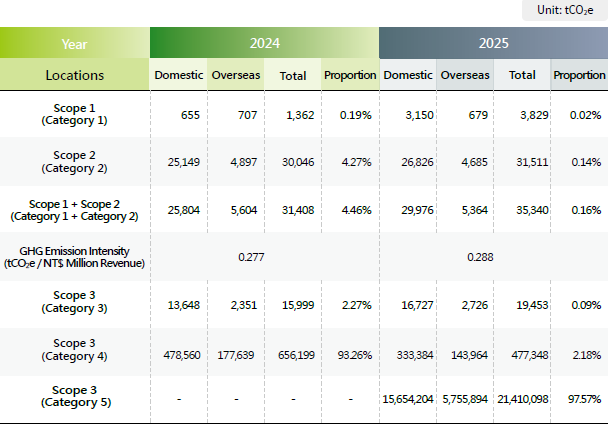
Note:
- In 2024, the inventory was conducted in accordance with ISO 14064-1; starting in 2025, the inventory is prepared in accordance with the GHG Protocol. All data have been verified by an independent third party.
- In 2025, the GHG emission data covers the Realtek Group's 19 global sites, adding Biomedical Office 1 and the sites in Germany and India compared to 2024.
- Scope 1 includes diesel, gasoline, refrigerants, septic tanks, and fire extinguishers; Scope 2 includes purchased electricity and thermal energy; Scope 3 (Category 3) includes upstream and downstream transportation and distribution, as well as employee commuting and business travel; Scope 3 (Category 4) includes purchased goods, capital goods, upstream energy emissions (newly included in 2025), waste disposal, etc.; and Scope 3 (Category 5) includes the processing, use, and end-of-life treatment of sold products.
- Global Warming Potential (GWP) values are sourced from the IPCC Sixth Assessment Report (AR6), 2021.
- Sources of conversion factors: IEA emission factors, the Ministry of Environment's Greenhouse Gas Emission Factor Management Table (Version 6.0.4), and the greenhouse gas emission factors announced on February 5, 2024.
- The electricity carbon emission factors adopted are the values published by the respective countries and the factor of 0.474 kgCO2e/kWh announced in 2024 by the Energy Administration, Ministry of Economic Affairs, Taiwan.
- Emission data is rounded to the nearest whole number.
- GHG Emissions at Realtek's Taiwan Operational Sites
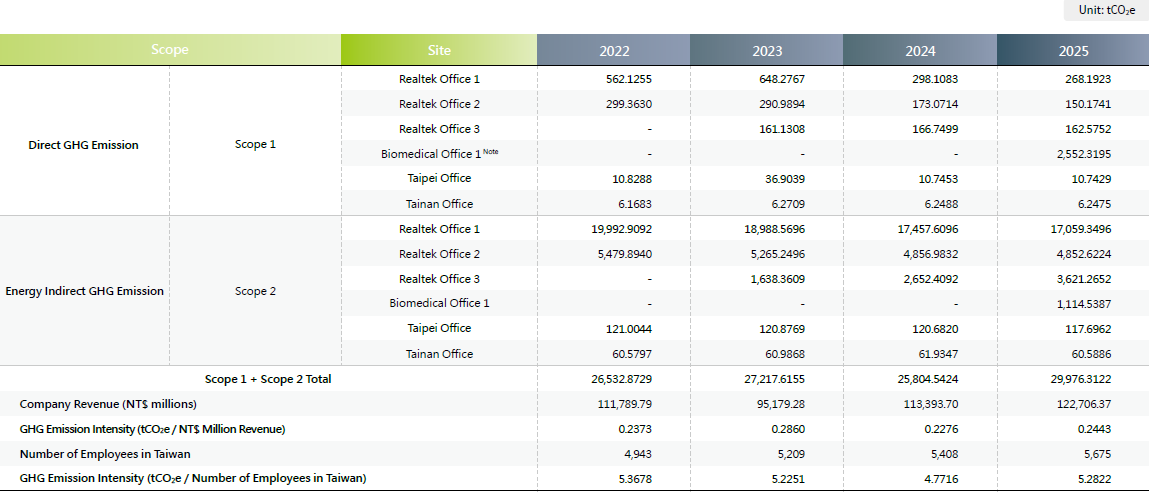
Note:
- Realtek Office 3 and Biomedical Office 1 commenced operations in 2023 and 2025, respectively; therefore, their greenhouse gas emissions were included in the inventory starting in those respective years. Following the opening of Biomedical Office 1 in 2025, the installation of FM-200 fire suppression equipment, which uses a high-GWP (global warming potential) extinguishing agent (heptafluoropropane, HFC-227ea), resulted in a nonroutine increase in Scope 1 emissions.
- Scope 1 includes diesel, gasoline, refrigerant, septic tanks, and fire extinguishers; Scope 2 includes purchased electricity.
- Global Warming Potential (GWP) values are sourced from the IPCC Sixth Assessment Report (AR6), 2021.
- Sources of conversion factors: the Ministry of Environment's Greenhouse Gas Emission Factor Management Table (Version 6.0.4), and the greenhouse gas emission factors announced on February 5, 2024.
- The electricity carbon emission factor is calculated using the factor of 0.474 kgCO2e/kWh announced in 2024 by the Energy Administration, Ministry of Economic Affairs, Taiwan.
- The greenhouse gas emission intensity calculation covers only the sum of Scope 1 and Scope 2 emissions from Realtek's operational sites in Taiwan.
GHG Emissions Reduction Plan
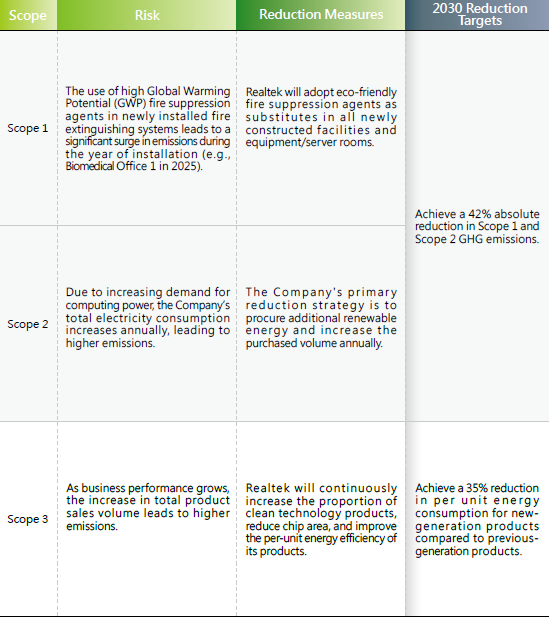
Note: The emissions reduction targets are aligned with our SBTi target submission.
Energy Management
Energy Management Policy
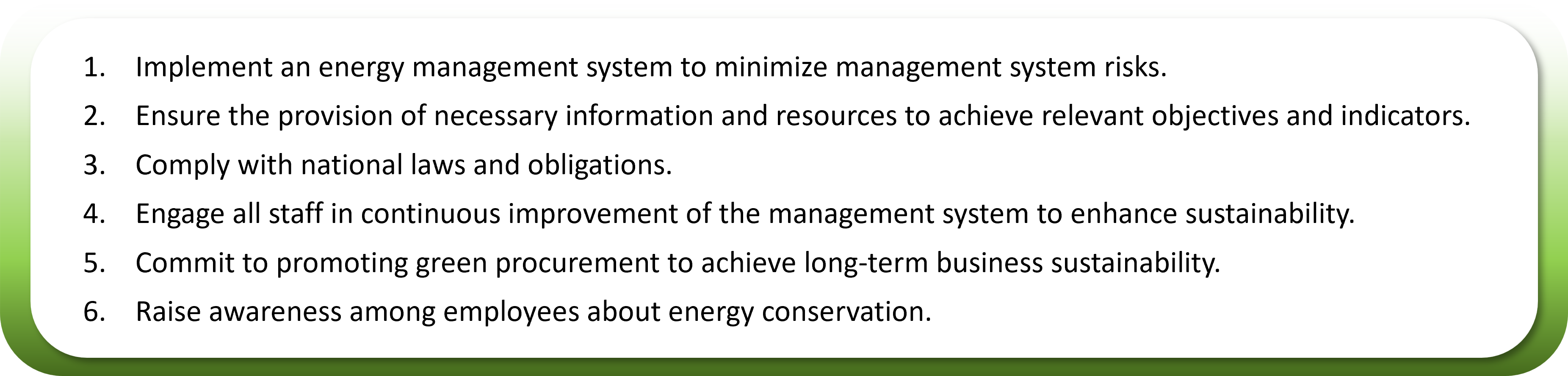
Energy Use Efficiency
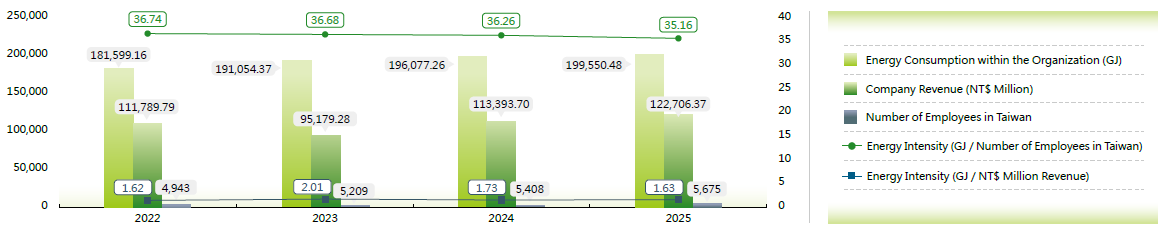
As a professional IC design house, Realtek's primary operational energy consumption stems from purchased electricity, fuel for emergency generators, and gasoline for official vehicles. The Company does not operate heating equipment such as coal-fired, gas-fired, or boiler systems, nor is it involved in high-energy consumption production processes like smelting or polymerization. In 2025, Realtek's renewable energy consumption significantly increased to 2,486,258 kWh, which led to a reduction in non-renewable energy consumption, effectively offsetting the rise in electricity demand from its operational expansion. Realtek continues to implement various effective measures, including enhancing overall electricity efficiency, adopting an energy management system, installing solar power and energy storage equipment, and purchasing renewable energy, to steadily progress toward its goal of achieving net-zero carbon emissions by 2050.
- Energy Consumption at Realtek's Taiwan Operational Sites over the Past Four Years

Note:
- Data Sources: Data for purchased electricity is based on actual consumption from electricity bills; data for gasoline and diesel is based on the Company's internal fuel level records; and data for self-generated electricity is sourced from the cloud-based solar inverter system.
- The 2025 energy conversion factors are primarily based on the Table of Unit Calorific Values for Energy Products from the 2021 Energy Statistics Handbook by the Energy Administration, Ministry of Economic Affairs: Electricity: 3,598.24 kJ/kWh; and with reference to the “Calorific Values of Motor Gasoline, Diesel, Liquefied Petroleum Gas and Natural Gas for 2025” announced by the Ministry of Environment on 10 February 2026: Gasoline: 31,739.82 kJ/L; Diesel: 36,133.02 kJ/L.
- Realtek's Energy Intensity for the Past Four Years
Multi-pronged Approach to Energy Conservation to Increase Energy Efficiency
Realtek is committed to enhancing energy efficiency and actively implementing energy conservation and carbon-reduction policies. The Facility Department serves as the primary responsible unit, overseeing the Company's energy management and efficiency improvements. Realtek completed the establishment of its energy management system platform in 2022. Subsequently, Hsinchu Office 1 obtained ISO 50001 Energy Management System certification in 2023, followed by Hsinchu Office 2 in 2024 and Hsinchu Office 3 in 2025, thereby progressively optimizing the energy management frameworks across all major operational sites. The Company verifies its energy performance by conducting energy audits, establishing energy baselines, setting energy performance indicators (EnPIs), objectives, targets, and action plans, and incorporating relevant methodologies and the International Performance Measurement and Verification Protocol (IPMVP).
Realtek aims to achieve a 50% renewable energy by 2030, with a voluntary commitment to reach 100% by 2050. Additionally, the Company has set an annual energy management target to reduce electricity consumption by 1%. Through the intelligent management of electricity consumption data, the Company effectively analyzes, tracks, improves, and verifies the energy consumption of various systems, such as power systems, IT data centers, lighting, air conditioning, gas systems, and testing area equipment – thereby actively implementing robust energy management.
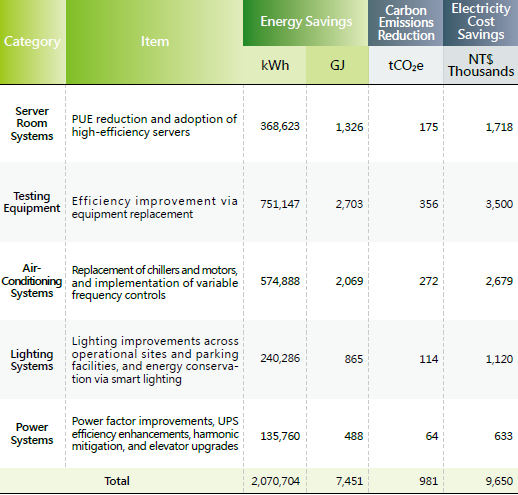
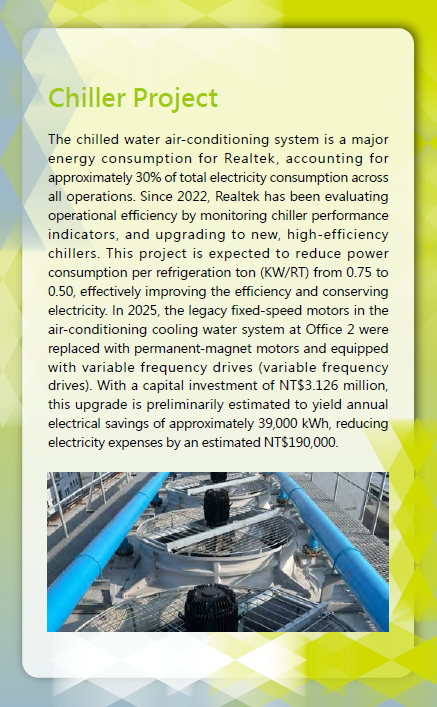
In 2025, Realtek's Facility Department, in collaboration with the Supply Management Center, Information Technology Division, and R&D Center, continued to implement energy conservation and carbon reduction measures. A total of 31 energy-saving initiatives were proposed, including improvements to air conditioning, lighting, and air compressors, as well as the optimization of server room cooling systems. With a total investment of approximately NT$30,240 thousand, these efforts achieved an overall electricity saving rate of 3.77% and total electricity savings of 2,070,000 kWh in 2025, resulting in an estimated savings of NT$9,650 thousand in electricity expenses. This is equivalent to a reduction of 9,734.97 GJ in thermal emissions, which translates to a carbon emission reduction of 1,282.40 tCO2e, comparable to the carbon sequestration capacity of 3.3 Daan Forest Parks Note.
Note: Based on the Council of Agriculture's calculation that one hectare of forest sequesters 15 metric tons of carbon annually, Daan Forest Park (25.8 hectares) can sequester 387 metric tons of carbon annually.
 |
 |
Note:
- The carbon emission factor for electricity applied herein is 0.474 kgCO2e/kWh, based on the 2024 data provided by the Energy Administration, MoEA.
- Electricity cost savings are calculated based on the 2025 average electricity rate of NT$4.66 per kWh.
- The scope of the energy-saving data herein covers Hsinchu Office 1, Hsinchu Office 2 and Hsinchu Office 3, which is consistent with the scope of the Company's ISO 50001 certification.
- Energy savings for server room systems are calculated by comparing the power consumption of the rack cabinets and their ancillary equipment against that of a traditional server room.
- Electricity savings from the replacement of testing equipment are calculated by comparing the average monthly power consumption of the equipment for the year against its average monthly consumption in the fourth quarter of the previous year.
- For air-conditioning system, an energy baseline is established using electricity consumption data from the year prior to equipment replacement. Energy savings are then calculated by comparing this baseline against the system's electricity consumption for the current year.
- Energy savings for lighting and power systems are calculated based on the difference in equipment specifications before and after replacement.
- Realtek Electricity Savings Rate for the Past 4 Years
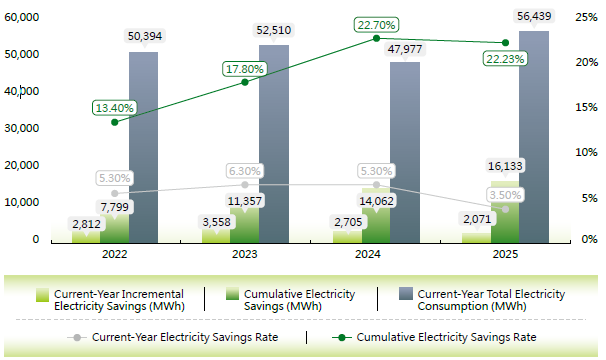
Note:
- The base year for cumulative electricity savings is 2018.
- The decrease in the cumulative electricity savings rate in 2025 compared to 2024 is due to the commissioning of Biomedical Office 1, which led to a significant increase in electricity consumption.
Realtek's Renewable Energy Strategy and Internal Carbon Pricing
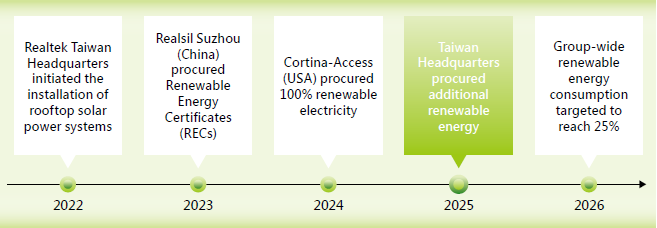
Renewable energy development is a critical issue in the global energy transition. To effectively reduce Realtek Group's carbon emissions worldwide, the Company has set a target of 50% renewable energy usage by 2030 and made a voluntary commitment to achieving 100% renewable energy usage by 2050. Realtek continuously consolidates energy consumption data from all operational sites to identify and capitalize on opportunities for renewable energy adoption. In 2025, Realtek's Suzhou subsidiary, Realsil, continued to procure China Green Electricity Certificates (GECs), successfully achieving net-zero Scope 2 GHG emissions for the facility. Similarly, Realtek's US subsidiary, Cortina-Access, enrolled in the Total Green Program offered by local utility provider San Jose Clean Energy in 2024, successfully achieving its goal of 100% renewable energy usage.
Furthermore, Realtek's headquarters is proactively installing renewable energy generation facilities based on a self-generation and self-consumption model. Solar panels have been installed across the rooftops of its various Taiwan sites, with the converted solar power supplying daily operations. The renewable energy installation project involves an estimated investment of NT$108 million and is being implemented in five phases. Upon completion in 2026, it is expected to reach an installed capacity of 1,654 kW, generating approximately 1.9 million kWh of green electricity annually, equivalent to a reduction of approximately 900 tCO2e Note in GHG emissions. In 2025, power generation reached 1,548,447 kWh, yielding a GHG emission reduction benefit of 734 tCO2e. Through the proactive adoption of renewable energy, the Company effectively mitigates greenhouse gas emissions.
Note: Estimates are calculated based on and average power generation of 3 hours per day for 360 days a year, utilizing the 2024 electricity emission factor of 0.474 kgCO2e/kWh.
|
|
- Internal Carbon Pricing
In 2025, Realtek implemented an Internal Carbon Pricing mechanism, setting the price at US$100/tCO2e. This price is derived by dividing the cost of procured renewable energy by the actual tons of GHG emission reductions. Concurrently, the Company utilizes a shadow pricing approach to evaluate the Return on Investment (ROI) for facility energy-saving and carbon-reduction projects. This aims to accelerate green investment decisions and drives the Company's low-carbon transition. Moving forward, the internal carbon price will be adjusted in accordance with international decarbonization scenarios or carbon market pricing.
Supporting the National Green Energy Industry
Realtek actively supports Taiwan's 2050 net-zero transition, investing NT$50 million in a five-year green bond (Bond Abbreviation: P13 Taipower 6A; Code: B903ZV) issued by Taiwan Power Company. Realtek received green bond accreditation from the Taipei Exchange on August 15, 2024. In alignment with government policy to develop green energy, the proceeds from this bond are allocated to the development of offshore wind power, smart grid systems, and the solar power grid projects.
Realtek Green Buildings
To promote corporate sustainability and environmental stewardship, Realtek has set stringent green building targets. Since 2020, all newly acquired and constructed facilities are required to meet green building certification standards. Specifically, newly acquired and constructed facilities must obtain Taiwan's EEWH Green Building certification, while newly constructed facilities are additionally required to achieve the U.S. LEED Green Building certification. To achieve these targets, Realtek integrates both EEWH and LEED design standards into the planning and construction phases of new facilities. This involves incorporating comprehensive green building measures, including structural concrete blended with blast-furnace slag, double-glazed Low-E glass curtain walls, lightweight drywall partitions, eco-friendly interior building materials, Level 1 energy-efficient variable frequency chillers, water-saving restroom fixtures, and LED lighting systems. In terms of green building investments, related capital expenditure exceeded NT$100 million in 2025 alone. From 2020 to 2025, the Company's cumulative investment in green facilities exceeded NT$310 million. This encompasses acquisitions of green real estate, self-constructed green facilities, and the procurement of eco-friendly building materials.
- Realtek Green Building Sustainability Goals
- Adopt the EEWH (Taiwan) and LEED (US) green building design standards
- Find a balance between environmental protection and cost effectiveness, and efficiently reduce the buildings′ GHG emissions
- Improve energy and water use efficiency
- Reducing energy consumption and environmental burdens generated during the construction and usage phases of buildings
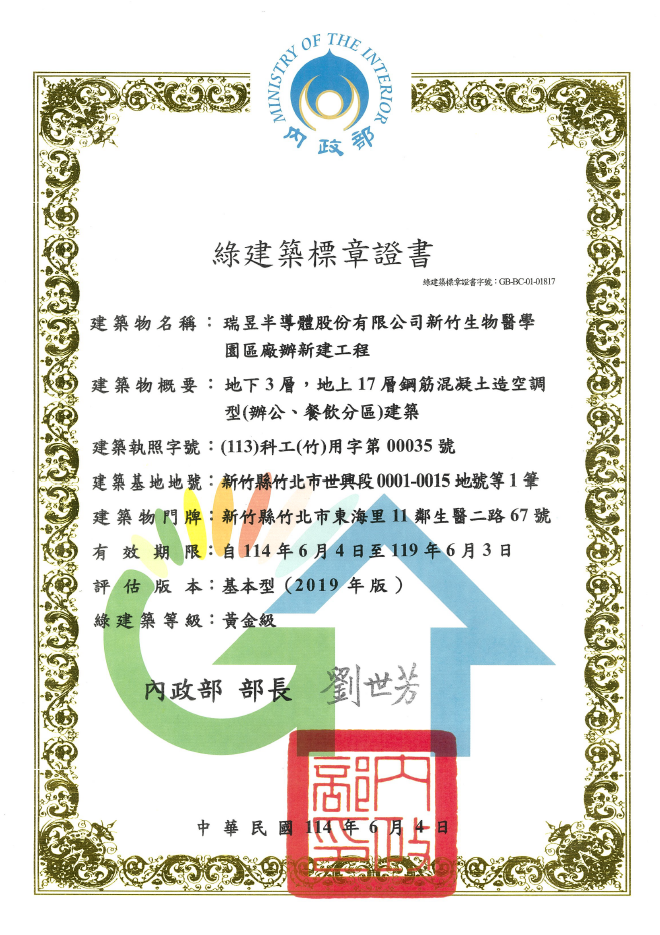
In terms of green building certifications, Realtek Hsinchu Office 3 achieved EEWH Bronze and LEED Gold certifications in 2023; Realtek Biomedical Building received the EEWH Gold candidate certificate in October 2022, and successfully achieved both EEWH Gold and LEED Gold certifications in the first half of 2025.
- Green Building Features of Realtek Biomedical Office 1
- Water Recycling and Reuse System: Recovers approximately 2,040 m3 of condensate water and 998 m3 of rainwater.
- Rooftop Solar Power System: Scheduled for installation in 2026, with an estimated annual power generation of 130,000 kWh.
- Central Monitoring System: Both lighting and air-conditioning systems are integrated into a centralized monitoring system.
- Energy-Efficient Lighting Design: Features energy-saving flat-panel LED fixtures throughout the building, paired with occupancy sensors in common areas.
|
EEWH Gold Certification
|
LEED Gold Certification
|

Water Resource Management
Water Withdrawn
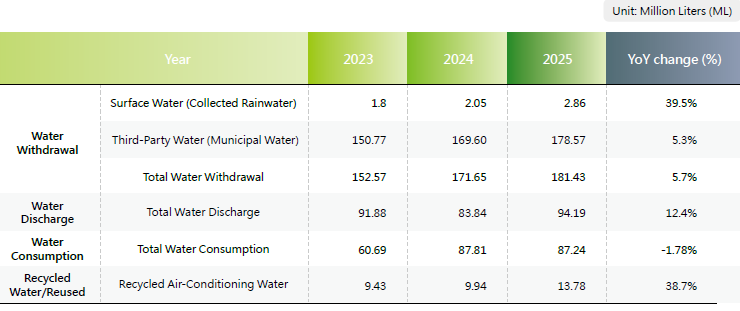
Water used in Realtek's operations is primarily for general domestic purposes. The scope of water resource data collection covers the Company's operational sites in Taiwan. The Company's main operational sites in Taiwan are located in the Hsinchu Science Park, with water sourced from the Baoshan Reservoir in Hsinchu. To evaluate water risk levels, Realtek adopts the World Resources Institute's (WRI) “Aqueduct Water Risk Atlas,” which shows the percentage of total water withdrawal and water consumption from areas with high or extremely high baseline water stress are both zero. Additionally, Realtek does not extract groundwater or use seawater, indicating a low potential impact on local water resources. In 2025, the total water withdrawn was 181.43 million liters, comprising municipal water (98%) and collected rainwater (2%). This figure represents a 5.7% increase in annual total water withdrawn compared to the previous year, primarily due to the official commencement of operations at Biomedical Office 1 in 2025.
Water Discharge
All industrial and domestic wastewater generated by enterprises within the Hsinchu Science Park is collected via the sewer system and directed to the Science Park's wastewater treatment plant for processing. The treated water—with quality better than national effluent standards (TDS ≤ 1,000 mg/L)—is discharged through a dedicated pipeline into the Keya River (a non–waterstressed area), causing no adverse impact on the ecological environment or water quality. In 2025, Realtek discharged 94.19 million liters of domestic wastewater. The Company generates no process wastewater, involves no discharge of substances of concern, and poses no risk of environmental impact from wastewater leaks or spills.
- 2025 Water Sources at Realtek's Taiwan Operational Sites

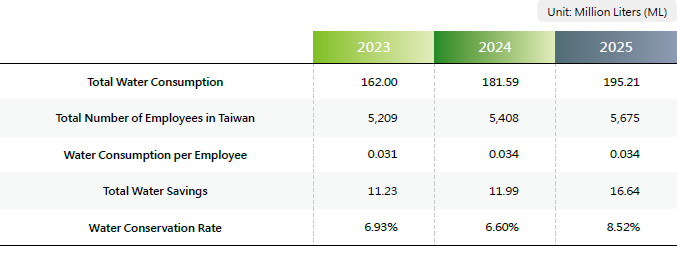
- Water Usage at Realtek's Taiwan Operational Sites over the Past Three Years
Note:
- 1,000 cubic meters (m3) = 1 Million Liters (ML).
- Municipal water: The third-party water supplier is the Taiwan Water Corporation.
- Wastewater is primarily processed by a third party: the Hsinchu Science Park Wastewater Treatment Plant.
- All water withdrawn is freshwater (TDS ≤ 1,000 mg/L).
- The volume of collected rainwater is an estimate, calculated by multiplying the statistical rainfall data from the meteorological agency by the rooftop rainwater collection area of Realtek Office 1.
- Water consumption and discharge volumes for the Taipei and Tainan offices are estimates. Wastewater discharge is estimated at 80% of total water withdrawal, with the remaining 20% accounted for as water consumption.
- Total water withdrawal is the sum of surface water and third-party water supply (municipal water).
Water Conservation Actions
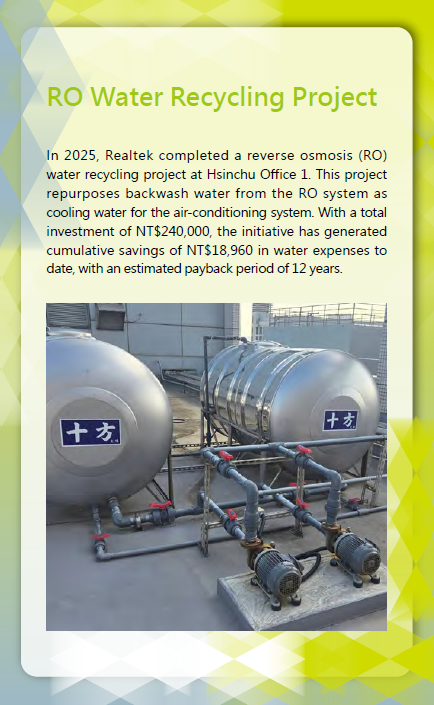
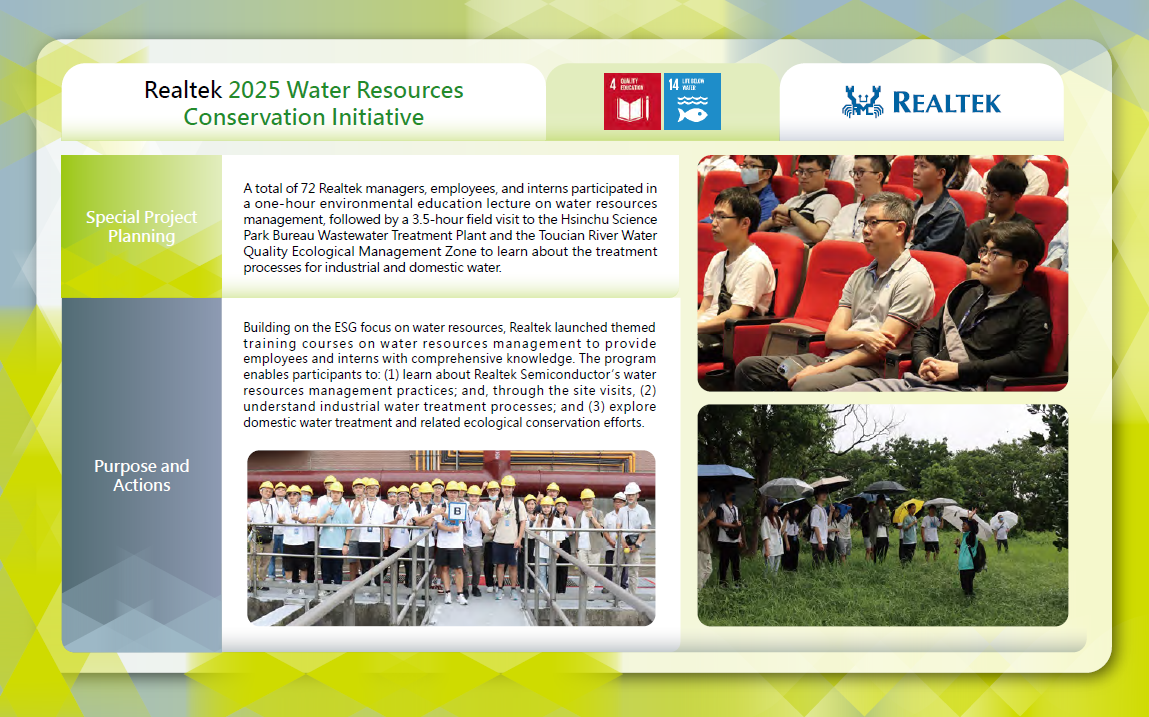
Realtek has a long-standing focus on water resources and environmental issues, and is dedicated to continuously optimizing water recycling and reuse methods to enhance overall water efficiency. The Company's ongoing water conservation projects include the reuse of recycled water, rainwater harvesting, and the reclamation of air conditioning condensation and cooling water. Through these water reclamation and reuse measures, Realtek maximizes water utilization efficiency and minimizes its environmental impact. In 2025, the Company's total water savings amounted to 16.64 million liters, achieving a water conservation rate of 8.52% and successfully surpassing the target of 6%. Looking ahead, Realtek's target for 2030 is to reach a water conservation rate of 7%. With regard to specific water conservation and reuse measures, the Company completed an optimization of the RO system at Office 1 in January 2025. This project repurposes backwash water as makeup water for the cooling system, saving over 4 metric tons of municipal water daily. As of December 31, 2025, the cumulative volume of recovered water reached 1,580 metric tons. Furthermore, Realtek will continue to evaluate water conservation measures at Office 2 and 3 to enhance the Group's overall water conservation rate.
Note:
|
 |
As a fabless IC design house, Realtek focuses on IC design and sales, outsourcing manufacturing to specialized foundries. Since the Company does not directly manufacture or sell end-user electronic products, it has not established tracking or recycling mechanisms for Waste Electrical and Electronic Equipment (WEEE) associated with end products.
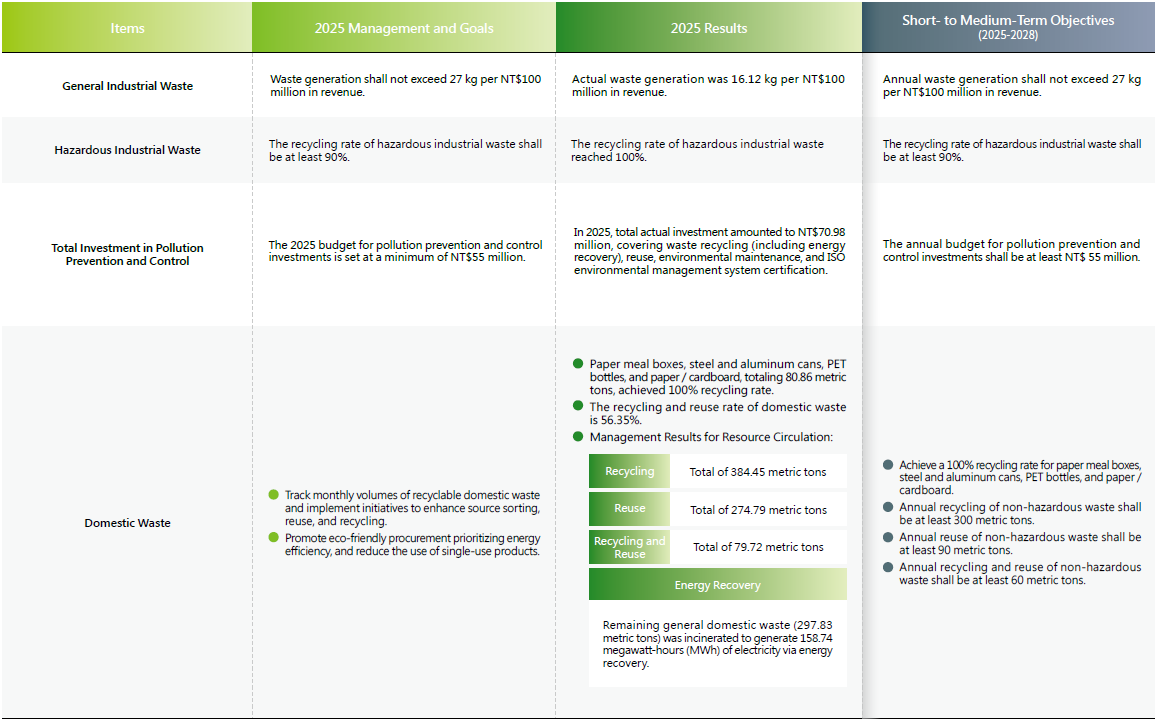
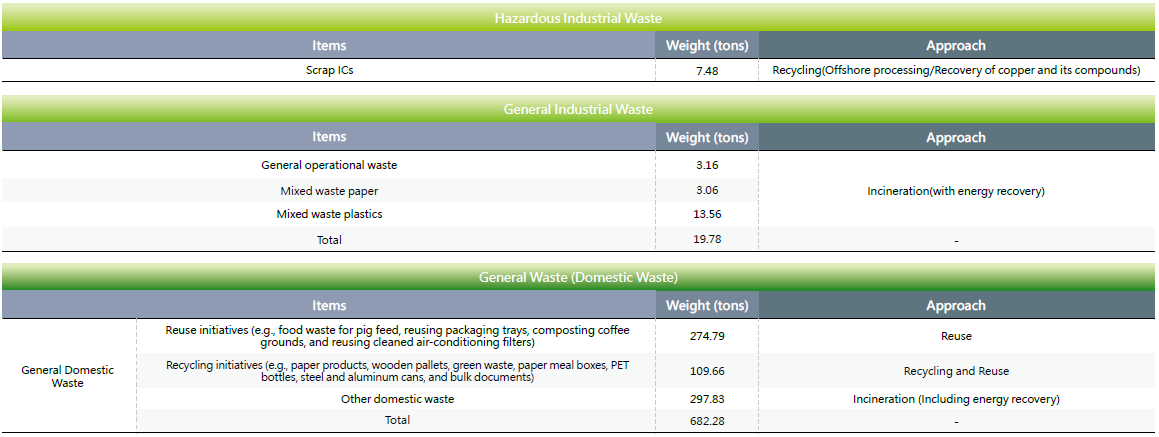
Realtek is equally committed to managing waste generated from its own operations. Waste across all operating sites is sorted, recycled, and properly treated in compliance with relevant regulations. Waste generated at Taipei and Tainan offices is classified as general waste. At the Hsinchu operational sites, waste encompasses both domestic waste and industrial waste (comprising hazardous and general industrial waste). In 2025, the Hsinchu operational sites generated approximately 682.28 metric tons of domestic waste Note 1. Of this, 384.45 metric tons were effectively recycled and reused Note 2, achieving a recycling rate of 56.35%. Furthermore, a total of 27.26 metric tons of industrial waste was generated, consisting of 7.48 metric tons of hazardous waste and 19.78 metric tons of general industrial waste, all of which were regularly cleared for off-site disposal.
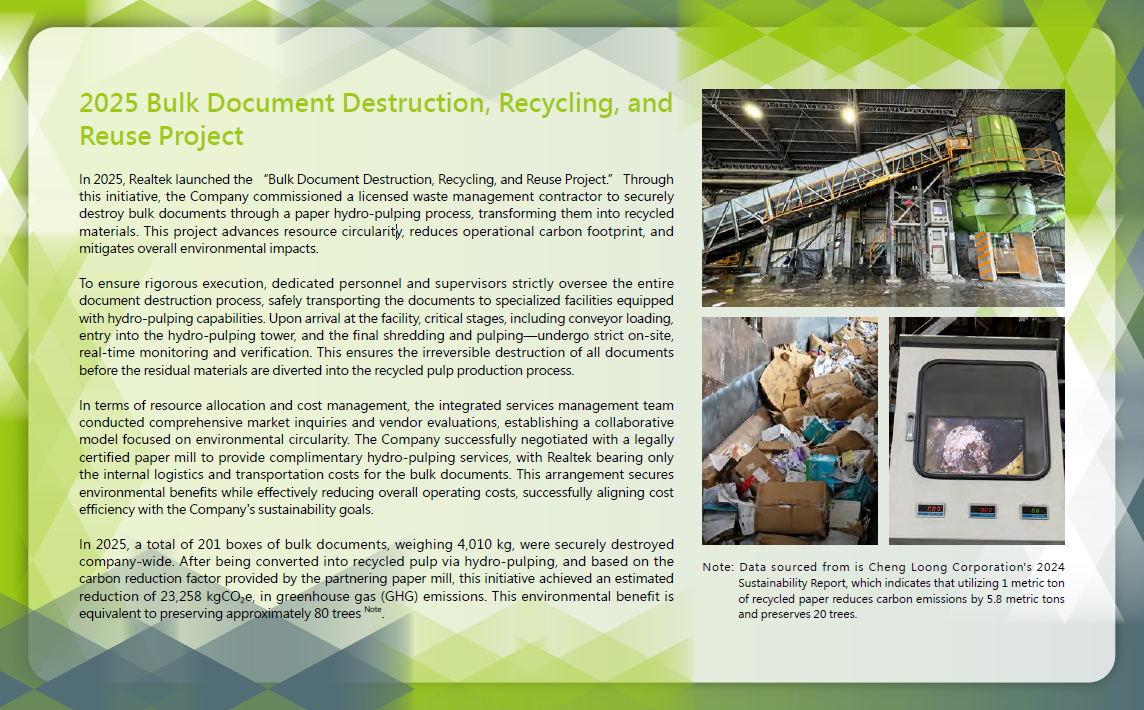
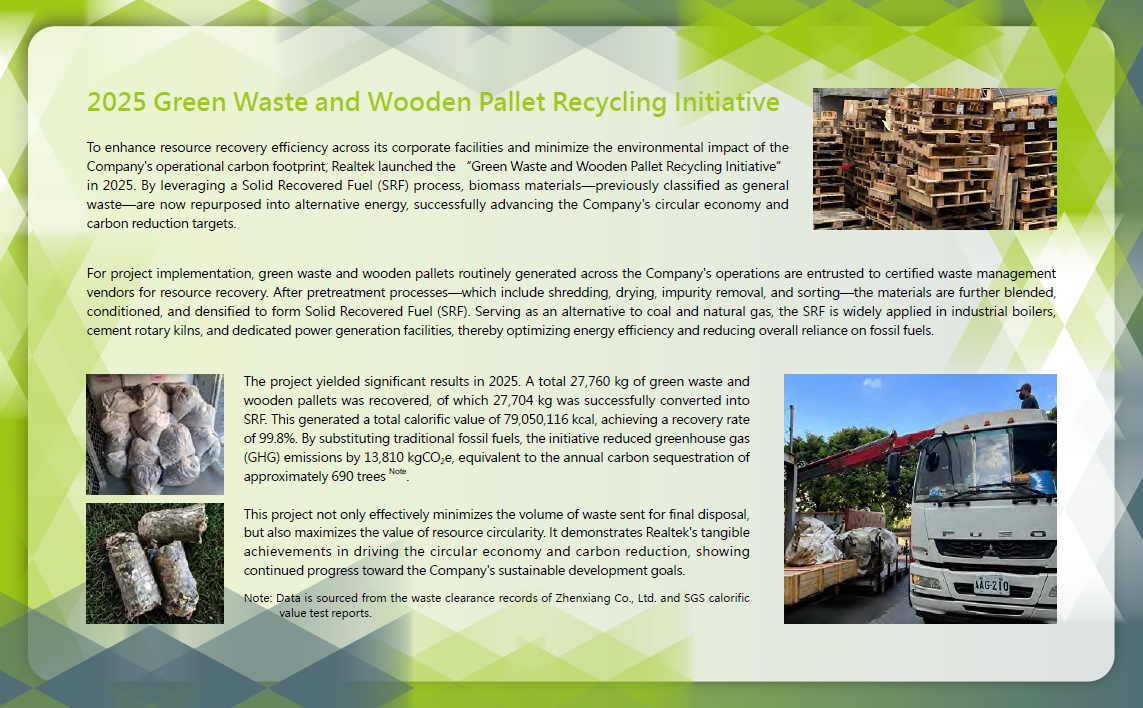
Within its waste reduction management system, Realtek systematically inventories waste sources, types, and generation volumes. Based on factors such as generation volumes, physical characteristics, hazard levels, and storage requirements, the Company establishes rigorous classification and treatment mechanisms. To enhance management efficacy, Realtek has instituted routine waste audit. Through document reviews, conducts on-site inspections, and waste segregation verifications, the Company systematically analyzes the sources, flows, and volume fluctuations of various waste streams, thereby identifying high-generation and anomalous categories. The audit process continuously uncovers opportunities for waste reduction, improved sorting, and resource reuse. In 2025, Realtek implemented several waste reduction initiatives, including the secure destruction and recycling of bulk documents, alongside the recycling of green waste (such as branches and fallen leaves) and wooden pallets. The outcomes of these projects are integrated back into management systems and operating procedures to optimize waste clearance and classification mechanisms, enhance recycling efficiency, and elevate overall waste management performance, thereby driving a continuous improvement cycle.
In addition to continuously developing smaller integrated circuits to reduce end-of-life product waste, Realtek also prioritizes minimizing its own waste generation and implementing robust recycling management. Realtek strictly complies with the provisions of the Waste Disposal Act and the regulations of the Hsinchu Science Park, conducting monthly waste tracking and reporting. As Realtek does not have its own production lines, its hazardous industrial waste primarily consists of defective outsourced ICs and wafers containing copper and its compounds, which are identified during in-house inspection. The Company continues to implement source reduction and secure storage management, establishing dedicated centralized storage areas for scrap ICs to mitigate soil contamination risks. Furthermore, all hazardous industrial waste is sent to certified processors for offshore recycling and treatment, with proper reporting and tracking as required by law. The annual recycling rate has consistently exceeded 90% over the years, achieving 100% in 2025 Note 3. Non-hazardous waste is regularly removed by licensed waste collectors, while general industrial waste is sent to government-approved incineration plants for energy recovery and resource reuse. For domestic waste, Realtek actively promotes resource recycling and reuse, such as using recycled paper as product packaging cushioning, repurposing 100% of food waste for pig feed, utilizing coffee grounds for plant compost, conducting energy recovery, and recycling waste paper to produce recycled paper. The Company actively promotes the achievements and concepts of resource recycling and reuse during New Employee Training Camp. Realtek also encourages employees to continuously consider actions beneficial to environmental protection and resource utilization in their daily lives, working together toward a greener environment.
In addition, Realtek is subject to regular audits and on-site inspections conducted by the Hsinchu Science Park Bureau and ISO 14001 certification bodies. These audits comprehensively evaluate the waste management system, reporting records, and on-site operations. In 2025, all operations were in full compliance with relevant regulations, with no major non-conformities identified. Through systematic management and audit mechanisms, Realtek continuously enhances its waste management performance, demonstrating the Company's commitment to resource circularity and environmental sustainability.
Note:
- "Domestic waste" is calculated based on the 2025 average daily per capita domestic waste generation rate of 1.38 kg, as announced by the Ministry of Environment. The total volume is calculated using the following formula: Number of employees at Realtek Office 1, Office 2, Office 3, and Biomedical Office 1 (5,675) × 12 (months per year) × 22 (assumed working days per month) × 0.33 (proportion of an 8-hour workday) × 1.38 (kg).
- Recyclable waste items are physically weighed to accurately calculate the total volume of waste diverted for recycling and reuse. Please note that domestic waste recycling and reuse statistics exclude energy recovery from incineration.
- All hazardous industrial waste is sent certified processors for offshore recycling and treatment.
- Waste Management Targets
- Total Industrial Waste at Realtek's Hsinchu Operational Site Over the Past Two Years

- 2025 Industrial Waste Generation Statistics at Realtek's Hsinchu Operational Sites
2025 Recycling, and Reuse Project
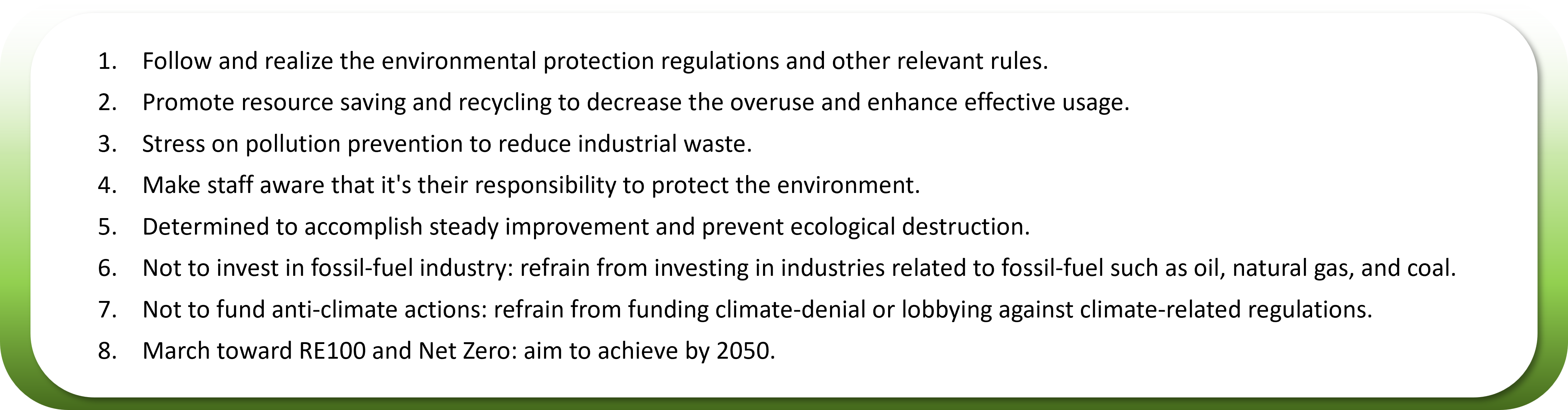
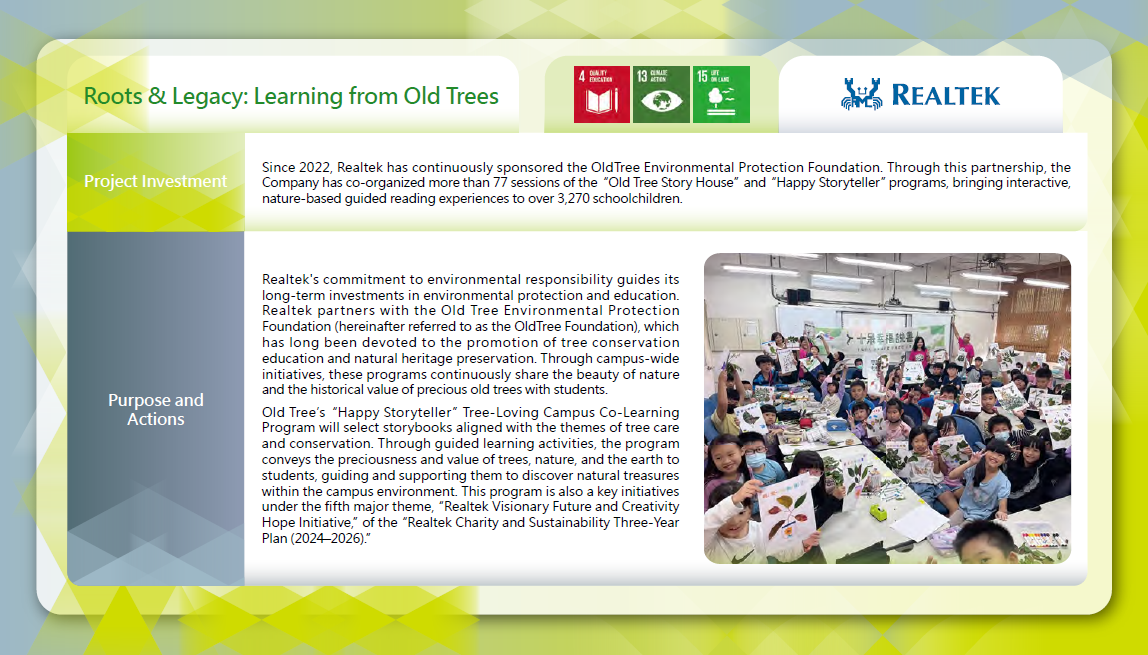
Environmental Education
2025 Environmental Conservation Highlights
Biodiversity
Biodiversity Conservation
Realtek recognizes that minimizing environmental pollution and natural resource depletion, while safeguarding ecosystems and the natural habitats of flora and fauna, are crucial to global sustainable development. Therefore, the Company maintains a long-standing commitment to environmental protection and ecological conservation. In alignment with the Convention on Biological Diversity (CBD) and the Kunming-Montreal Global Biodiversity Framework adopted at the 15th United Nations Convention on Biological Diversity (CBD, COP15), the Company has officially established the Realtek Semiconductor Biodiversity Statement . Guided by its sustainable governance strategy, Realtek drives collaboration with supply chain partners and stakeholders to advance environmental protection, species and habitat conservation, and forest preservation. By working together to sustain biodiversity, the Company strives to make tangible contributions to the long-term future of the planet and generations to come.
In 2024, the Company leveraged internationally recognized biodiversity risk assessment tools—including the Biodiversity Risk Filter (BRF) from the Worldwide Fund for Nature (WWF), the Discover Protected Areas and OECMs provided by Protected Planet, and the World Database on Protected Areas (WDPA) from the International Union for Conservation of Nature (IUCN)—to rigorously verify that none of its core operational sites overlap with critical biodiversity conservation areas. Furthermore, all Realtek facilities undergo comprehensive environmental compliance assessments. The selected operational sites are strategically located within government-approved industrial development zones, strictly avoiding any designated protected areas or preserved habitats.
Taskforce on Nature-related Financial Disclosures
In 2025, Realtek strategically aligned with the Taskforce on Nature-related Financial Disclosures (TNFD) v1.0 framework and its LEAP methodology (Locate, Evaluate, Assess, Prepare) methodology. By prioritizing the “Locate” and “Evaluate” phases, the Company systematically established mechanisms to identify, analyze, and respond to nature-related risks and opportunities. During the “Locate” phase, the Company comprehensively mapped locations and activities interfacing with nature across its direct operational sites and broader value chain. Subsequently, in the “Evaluate” phase, Realtek assessed its dependencies and impacts on ecosystem services, establishing a critical foundation for advancing its comprehensive nature-related management strategy.
- Locate: Mapping the Interface with Nature
Scope of Assessment: Direct Operations and Value Chain
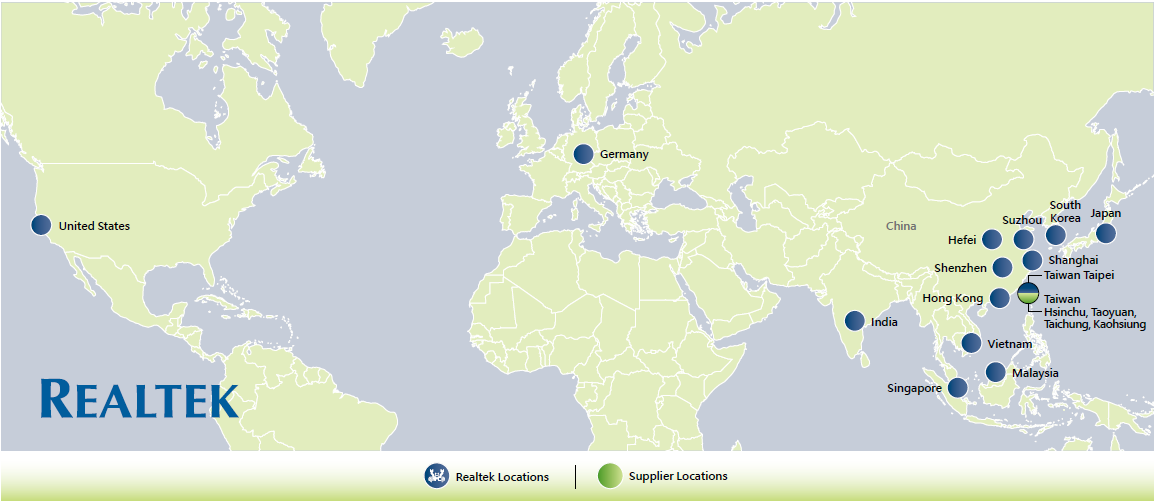
To systematically identify the interface with nature, the Company conducted a comprehensive mapping of its active operational footprint. Realtek prioritized 25 direct operational sites worldwide (including 3 manufacturing facilities and 22 offices) for this assessment. This geographic scope encompasses the headquarters in Taiwan, alongside operations across China, the United States, Germany, Japan, Singapore, Malaysia, Vietnam, India, and South Korea. In terms of the broader value chain, given that the environmental footprint of the IC design industry is predominantly concentrated in the upstream manufacturing phase, the Company strategically prioritized its management focus on critical production processes, including wafer foundry, packaging and testing, and memory manufacturing. Accordingly, the Company selected 8 Key Suppliers (representing wafer fabs, packaging and testing facilities, and memory manufacturers) as the primary subjects of our value chain assessment.
Analysis of Ecologically Sensitive Area Identification
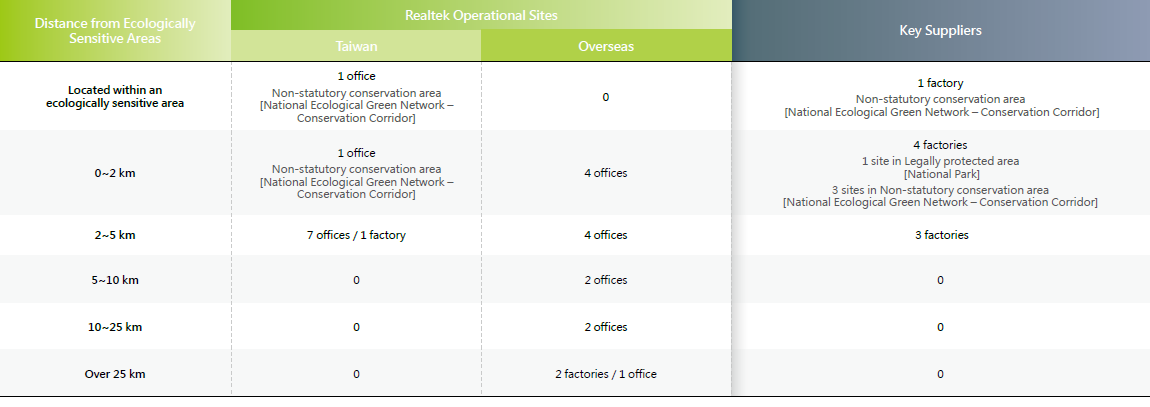
In the “Locate” phase, Realtek adopted a core strategy of “Global Breadth, Local Depth” to systematically identify biodiversity risks associated with its operating footprint and value chain. The Company conducted geospatial (GIS) overlay analysis, mapping the exact coordinates of its direct operational sites and Key Suppliers against major international databases, including the World Database on Protected Areas (WDPA), the IUCN Red List of Threatened Species, and Key Biodiversity Areas (KBAs), to establish a global risk baseline. Furthermore, localized conservation indicators for Taiwan were integrated to accurately screen ecologically sensitive areas requiring management intervention. The spatial analysis of Realtek's operational sites and Key Suppliers in relation to ecologically sensitive areas yielded the following results:

- Evaluate: Assessing Dependencies and Impacts on Nature
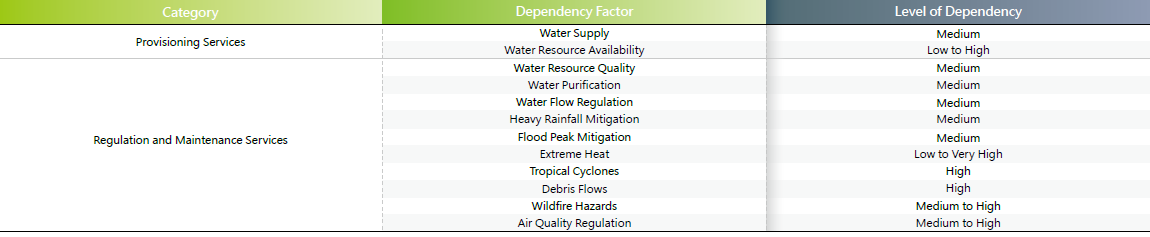
To comprehensively and objectively prioritize natural-related issues, Realtek has defined an assessment boundary that encompasses both its own operations and Key Suppliers. Leveraging internationally recognized methodologies, the Company adopted the Exploring Natural Capital Opportunities, Risks and Exposure (ENCORE) tool and the World wide Fund for Nature (WWF) Biodiversity Risk Filter (BRF). By mapping its specific industry characteristics and business activities through these tools, Realtek systematically identifies and evaluates its potential dependencies on ecosystem services as well as its potential impacts on the natural environment.
Realtek and its Supply Chain's Dependence and Physical Risks Related to Nature
Impacts of Realtek and its Supply Chain on the Natural Environment

Realtek is a fabless IC design company, with its operational footprint primarily consists of R&D centers and office facilities. Consequently, its direct dependencies and impacts on nature are inherently lower than the broader industry average. However, the degradation or disruption of the aforementioned natural capital and ecosystem services could pose material impacts to semiconductor supply chain continuity, production safety, and delivery stability. Accordingly, Realtek has prioritized these nature-related issues as a critical dimension for evaluating its entire value chain, with a strategic focus on key upstream suppliers. Moving forward, Realtek will integrate environmental monitoring data and existing nature-related disclosures from its Key Suppliers to conduct a more granular assessment of nature-related risks and opportunities. This data-driven approach will inform the development of robust, climate-resilient, and nature-positive management strategies. At the same time, the Company will collaborate with its supply chain partners and stakeholders to elevate the maturity of its natural capital and biodiversity management, ensuring robust alignment with international nature conservation and sustainable development frameworks.
Green Products
Innovative Clean Technology Products and Total Solutions
Realtek focuses on the research and design of integrated circuit (IC) products, backed by strong capabilities in manufacturing and system-level expertise. Through highly integrated designs, Realtek provides customers with high-performance, and low-power solutions. Realtek continues to drive product innovation and technology upgrades, incorporating energy efficiency as a key consideration in product design and helping customers implement high-performance, energy-efficient solutions across a wide range of electronic devices. For more information on our 2025 technological development and innovative solutions, please visit the News section on Realtek's official website.
Given that Realtek's IC chips are widely used in various types of end products, we actively enhance our product designs to develop chip solutions with higher performance, greater intelligence, and lower power consumption. We incorporate energy-saving concepts into the design process at the early stages of product development and introduce low-power architecture designs, power management technologies, and high-efficiency data transmission technologies tailored to different usage scenarios to reduce energy consumption of devices during operation and standby states. By continuously launching new generations of products with superior energy efficiency, Realtek is committed to reducing lifecycle power consumption throughout production and product-usage, thereby decreasing greenhouse gas emissions and supporting the global industry low-carbon sustainability development.
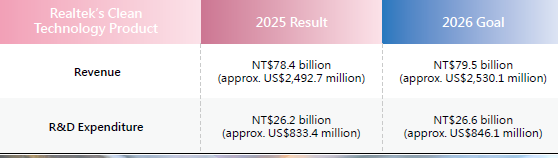
In 2025, revenue contributed from Clean Technology Products Note amounted to NT$78.4 billion (approx. US$2,492.7 million), representing 63.9% of total revenue and marking an increase of NT$21.7 billion compared with 2024. Dedicated R&D expenditure for Clean Technology Products reached NT$26.2 billion (approx. US$833.4 million), accounting for 74.7% of total R&D spending, an increase of NT$2.7 billion over 2024. For detailed information on Clean Technology Products, please refer to the Introduction to Innovative Clean Technology Products in 2025. To continuously expand the business footprint of Clean Technology Products, Realtek is actively setting quantitative and time-bound targets to increase, both clean tech revenue and R&D spending allocation to Clean Technology Products year over year. For new product pipelines, we target a minimum 35% reduction in energy consumption per unit compared with previous-generation products, putting environmental stewardship into concrete action while providing superior user experience.
Note: Realtek's Clean Technology Products refer to that either hold international energy-efficiency certifications (such as ENERGY STAR), or demonstrate superior energy efficiency compared to predecessor products under equivalent functional conditions.
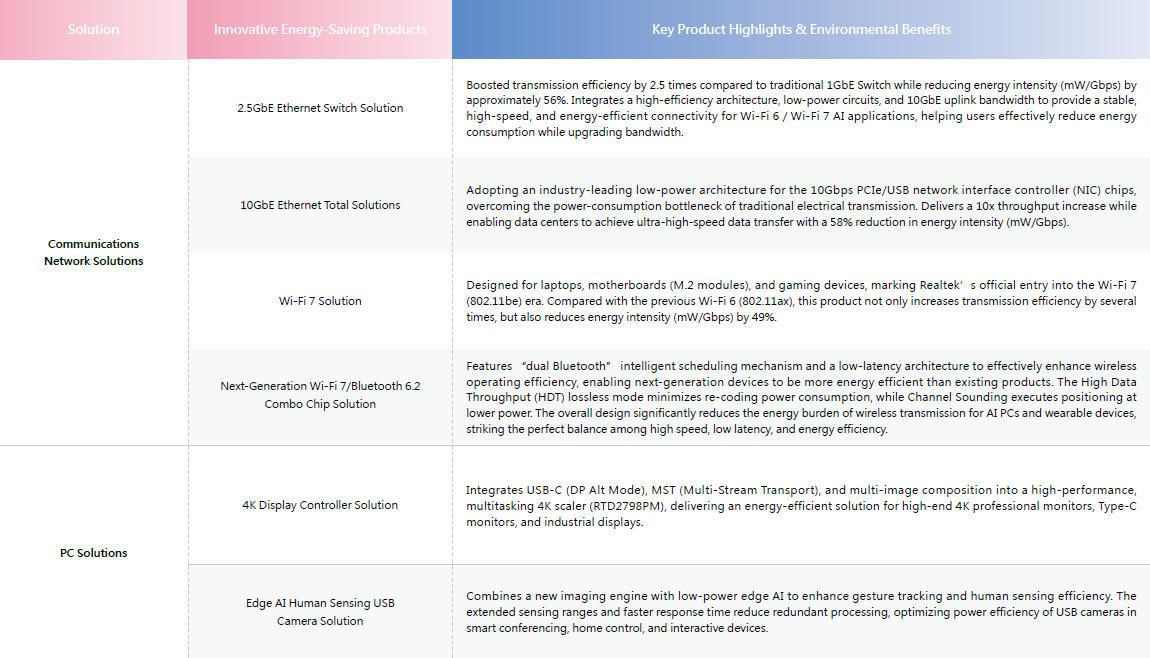
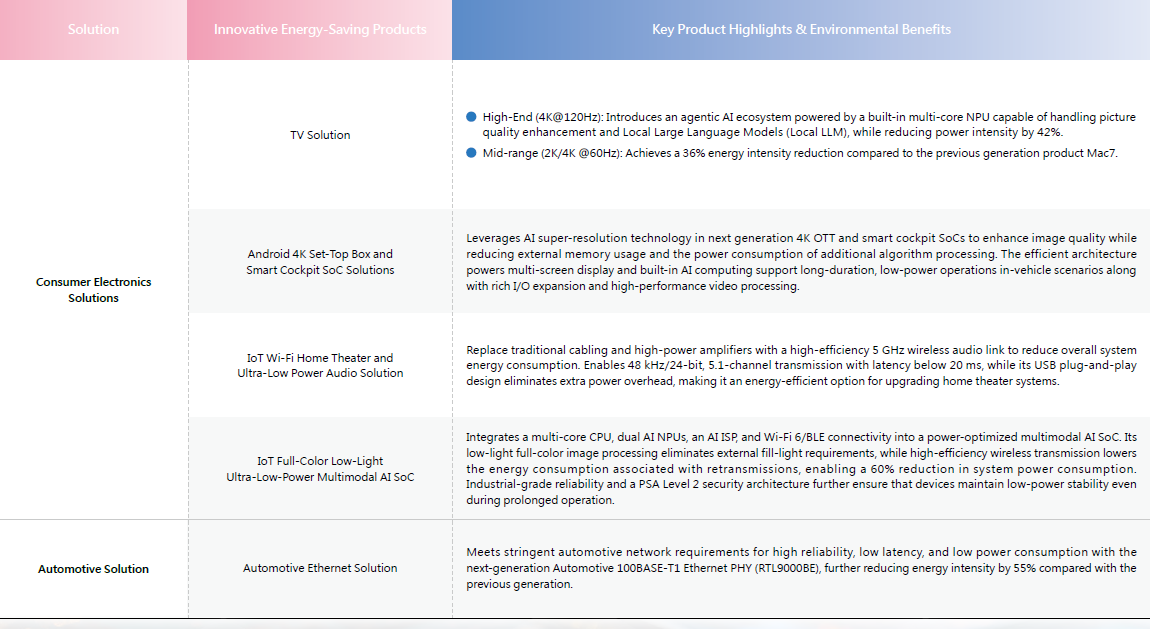
- Introduction to Innovative Clean Technology Products in 2025
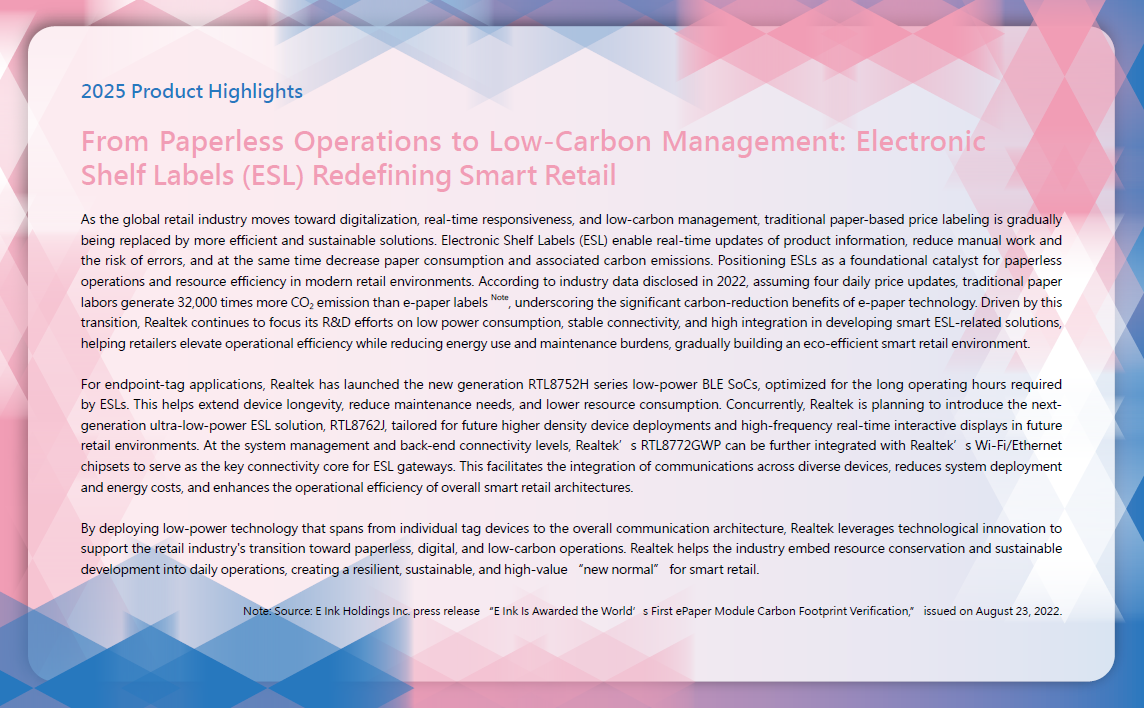
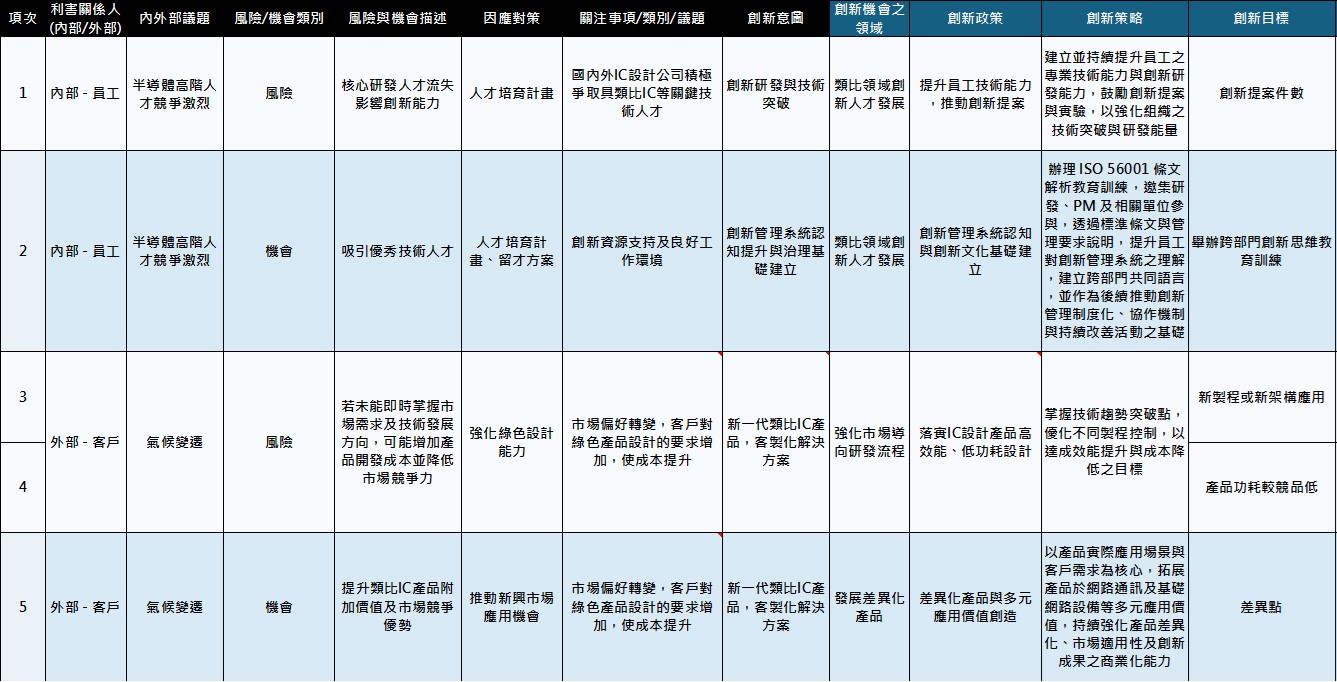
Introduces ISO 56001 Innovation Management System in 2026
The intention, policy, strategy and objective of ISO 56001 Innovation Management System:
Product Carbon Footprint
In 2024, Realtek fully launched the systematic product carbon footprint modeling and management initiative, covering greenhouse gas emissions across all stages, including raw material procurement, manufacturing, packaging, testing, and transportation. With the guidance of external consultants, the Company obtained a third-party verification statement for the ISO 14067 product carbon footprint covering all products. By accurately identifying carbon emission hotspots across the entire product lifecycle, Realtek collaborates with key suppliers to continuously optimize production and supply chain processes. This approach not only meets customer demand for low-carbon products but also drives the semiconductor industry toward a more environmentally friendly and sustainable future.
- ISO 14067 Product Carbon Footprint (Validity Period: 2023.11.23~2026.11.22)