
Sustainable Value Chain
Supplier Management
Supply Chain Sustainability Management: Strategy & Goal
Short-term (1 year)
◆ Continuously track key suppliers’c ompliance with Realtek ESG management standards
◆ Continuously conduct regular supplier evaluations
◆ Continuously carry out due diligence investigation and management of conflict minerals
◆ Continually track Key Suppliers' carbon footprint data
◆ Establish systematic management of company-wide product carbon footprint information
Medium- to long-term (2-10 years)
◆ Refer to the RBA Code of Conduct, implement supplier ESG evaluation and supplier surveys, and continuously track the sustainable development performance of the supply chain
◆ Work together with the supply chain to set energy saving and carbon-reduction targets, cooperate with Key Suppliers to complete greenhouse gas inventory, carbon footprint and other carbon management projects
◆ Deepen regional strategic cooperation, continuously improve regional local procurement, mitigate carbon emissions generated by material transportation, and reduce environmental impact
◆ Continuously pay attention to supplier’s biodiversity practices
Sustainability Contribution in 2025
◆ Attained a 100% signing rate for the Supplier Code of Conduct
◆ Achieved a 100% signing rate for the Conflict Free Minerals Policy Statement
◆ Ensured 100% of Tier-1 Key Suppliers met biodiversity survey criteria
◆ Sourced 100% of the mineral raw materials from RMI-conformant smelters
◆ Recycled and reused 100% of IC trays and anti-static boxes
◆ Completed carbon footprint data collection for 100% of Key Suppliers
◆ Required suppliers to adhere to the Intellectual Property Rights Protection Policy, in line with the Company's TIPS policy
Responsible Supply Chain
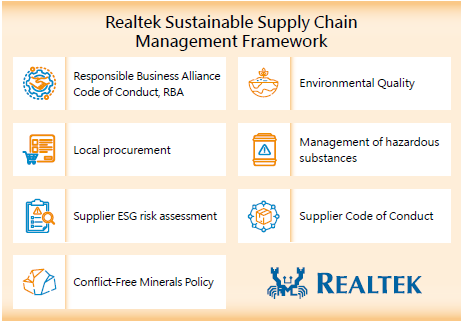
Realtek firmly believes that sustainable operation is a core value of its business. Therefore, it has integrated the three critical aspects of quality management, environmental protection, and sustainable development into its sustainable supply chain management strategy to ensure that both the company and its supply chain achieve sustainable development together. Realtek requires suppliers Note to sign the Realtek Supplier Code of Conduct, periodically assesses their sustainability performance, and has established an annual ESG risk assessment mechanism for Key Suppliers. Considering the impact on society and natural resources, Realtek mandates that suppliers comply with relevant laws and standards and refrain from using raw materials sourced from Conflict-Affected and High-Risk Areas (CAHRAs). Through long-term partnerships and professional specialization, Realtek collaborates with its supply chain partners. In the spirit of corporate sustainability and in alignment with the SDGs, the company jointly establishes diverse global partnerships and taking concrete actions to fulfill its commitment to sustainable development.
Note: The term 'suppliers' in this chapter refers to outsourced processing suppliers (including foundries, packaging and testing companies, and memory manufacturers), excluding general service providers.
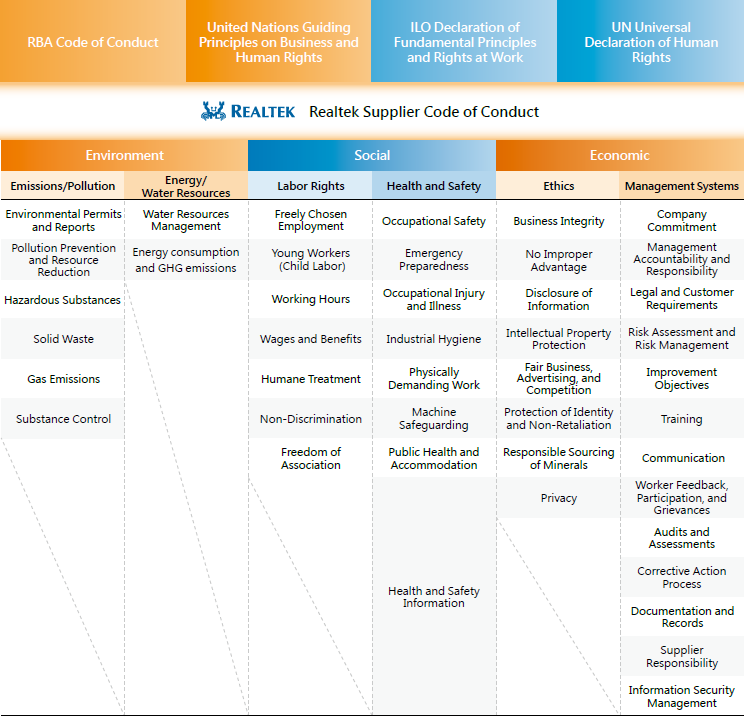
Supplier Code of Conduct
Realtek places great importance on responsible supply chain management and is committed to promoting safe working environment for its supply chain partners, ensuring workers are treated with respect and fairness, and upholding environmental protection and ethical standards. To this end, with reference to international standards such as the Responsible Business Alliance (RBA) Code of Conduct, the United Nations Guiding Principles on Business and Human Rights (UNGPs), the International Labour Organization's Declaration of Fundamental Principles and Rights at Work, and the United Nations Universal Declaration of Human Rights, the company has formulated the Realtek Supplier Code of Conduct. This code requires suppliers to fulfill their responsibilities across five key aspects: labor, health and safety, environment, ethics, and management systems. Suppliers are also required to fully comply with the laws and regulations of their respective countries or regions. Through this Code, Realtek communicates its stance on these five aspects and requires supply chain partners to jointly adhere to these requirements for responsible business practices.
In addition, Realtek has established the unified Supplier Management Guidelines, applicable to all suppliers, to ensure they meet basic management requirements in terms of quality, delivery, regulatory compliance, and ESG performance. Considering that non-Key Suppliers account for a relatively small share of total procurement and have limited impact on overall operations, Realtek, based on the principles of risk and materiality, focuses its management resources and enhanced assessment mechanisms primarily on Key Suppliers, while maintaining the integrity and effectiveness of overall supply chain management through a consistent set of policies and procedures.
Realtek Supplier Code of Conduct (Download)
- Supply Chain Information Security and Privacy Protection
When onboarding new suppliers, Realtek requires all of them to sign the Realtek Supplier Code of Conduct - or provide their own corporate codes of conduct, the RBA Code of Conduct Note - and submit a Conflict-Free Minerals Declaration. This measure ensures the implementation of responsible supply chain management, demonstrates Realtek's firm commitment and proactive actions, and promotes adherence to the highest standards among supply chain partners in areas such as labor, health and safety, environment, ethics, and management systems. Considering that the supply chain has a significant impact on the environment in areas such as water resources, energy consumption, and greenhouse gas emissions, Realtek incorporates nature-related issues into the scope of supply chain management through the Supplier Code of Conduct and the supplier evaluation mechanism. In 2025, in terms of management systems, to address the management needs related to information security and privacy protection, Realtek incorporated requirements on “Information Security Management” and “Intellectual Property Protection” into the Supplier Code of Conduct and formulated the Realtek Supply Chain Information Security Management Policy to clarify the principles and requirements that suppliers must follow. These measures aim to enhance suppliers′ capabilities in managing information security risks, ensure the security of Realtek′s information assets and confidential information, reduce potential cybersecurity and information leakage risks that may arise during supply chain collaboration, and jointly strengthen the cybersecurity resilience of the supply chain. It was confirmed that in 2025, 100% of Realtek′s suppliers complied with information security management requirements. Realtek had no new suppliers in 2025, and the signing rate of the Realtek Supplier Code of Conduct among existing suppliers was 100%. For the detailed contents of the Realtek Supplier Code of Conduct, please refer to the Sustainable Value Chain on Realtek's official website.
Note: If the supplier has completed the Responsible Business Alliance certification, it is deemed to have signed the Realtek Supplier Code of Conduct.
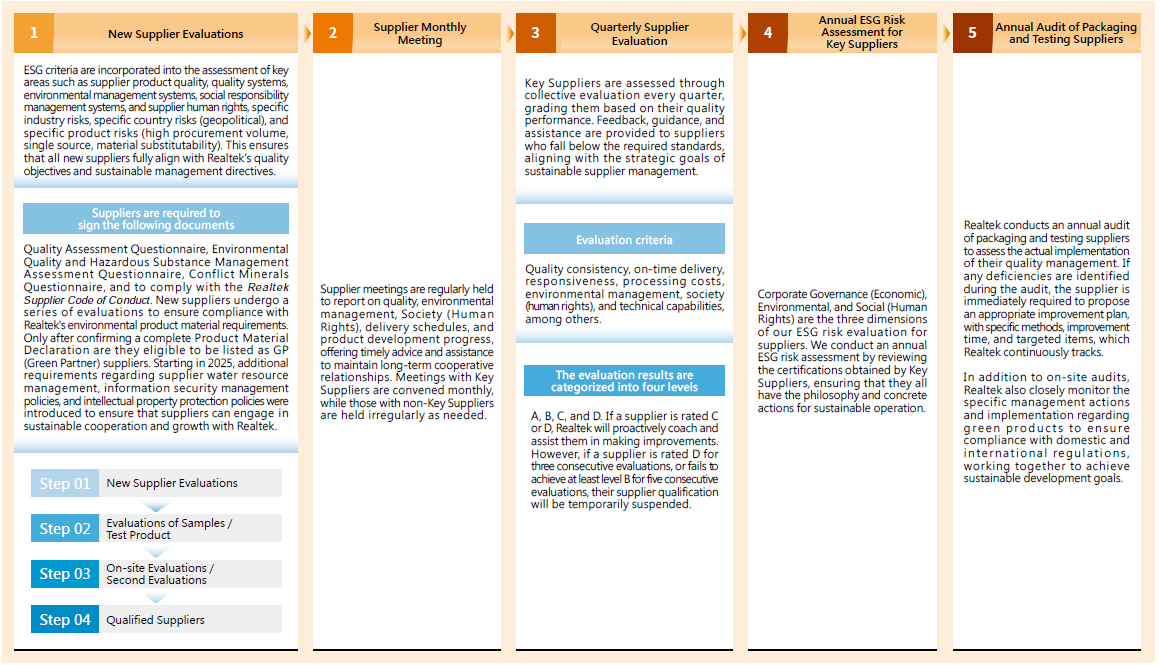
Supply Chain Sustainability Management Procedures
- Key Suppliers
To make supply chain responsibility management more representative, Realtek focuses its supply chain management efforts on “Key Suppliers.” In defining Key Suppliers, Realtek ranks its partners (including foundries, packaging and testing companies, and memory manufacturers) from high to low based on annual processing costs. The strategic partners whose cumulative amount accounts for the top 90% of outsourced processing costs are defined as Key Suppliers. Those accounting for the top 75% of outsourced processing costs are defined as “Tier-1 Key Suppliers.” “Key Suppliers” provide Realtek with crucial products, services, or materials, directly affecting Realtek's product quality, production efficiency, and customer satisfaction, and they are vital to operational activities. In 2025, Realtek had a total of 27 Key Suppliers (comprising 8 Tier-1 Key Suppliers), including 6 foundries, 9 packaging companies, 5 testing companies, and 7 memory manufacturers.
Key Suppliers play an important role in Realtek's supply chain and are crucial to Realtek's business operations and sustainable development. Realtek is committed to building long-term partnerships with Key Suppliers based on mutual trust, mutual benefit, and mutual assistance, to achieve success and long-term sustainable operations for both parties. Through rigorous management policies, Realtek ensures product quality and reliability, promotes technical cooperation and innovation, implements environmental and social responsibilities, and establishes stable supply and risk control mechanisms to maintain its R&D capabilities and competitive advantage. In the face of ever-changing market demands, Realtek collaborates with its Key Suppliers to integrate professional expertise and resources, safeguarding its brand reputation while jointly achieving mutual success and longterm sustainable operations.
- Key Supplier Management Mechanism
As a leading supplier in the global semiconductor industry, Realtek works collaboratively with supply chain partners to build a responsible supply chain, which is one of the key indicators of Realtek's sustainability management. Realtek has established management procedures for suppliers, such as Supplier Evaluation Mechanism, Supplier Performance Rating Procedure, and Supplier Quality Audit Procedure, and conducts supplier evaluations, audits, comparisons and other risk assessments. When entering into contracts, the procurement department requires suppliers to sign the Realtek Supplier Code of Conduct to ensure that suppliers understand and comply with the Company's requirements and standards. Realtek, with its rigorous attitude and sustainable mindset, assesses and supports every partner in the supply chain, hoping to grow together with suppliers, strengthen corporate governance, care for and value their employees, enhance environmental protection awareness, and work together to create a sustainable business model.
To enhance supply chain stability and robust compliance, Realtek actively implements the Taiwan Intellectual Property Management System (TIPS). Through its supplier management mechanisms, Realtek requires partners to jointly comply with intellectual property protection and confidential information management policies to mitigate intellectual property risks across the value chain. To ensure the effective implementation of these management systems, the Company continuously provides information security training to procurement staff and other relevant employees, in order to enhance their awareness of supply chain sustainability risks and strengthen their management capabilities, thereby enabling them to guide suppliers in achieving high-quality sustainability performance.
Key Supply Chain Sustainability Management Procedure
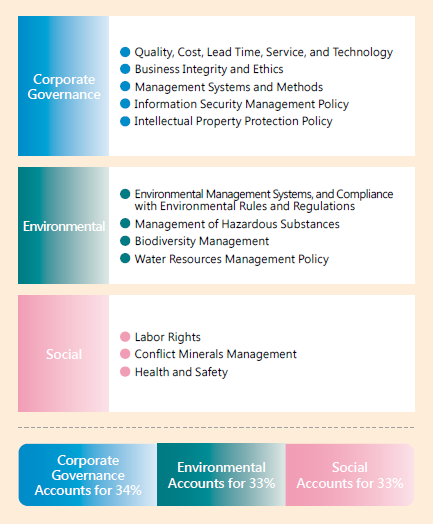
Annual ESG Risk Assessment of Key Suppliers
Realtek evaluates Key Suppliers' ESG risks based on three major dimensions: Corporate Governance, Environmental, and Social. A broad scope of management criteria aims to ensure that Key Suppliers embrace sustainable operations concepts and take concrete actions. Realtek envisions collaborating with supplier partners to build a sustainable business model.
- Key Supplier Certifications in 2025
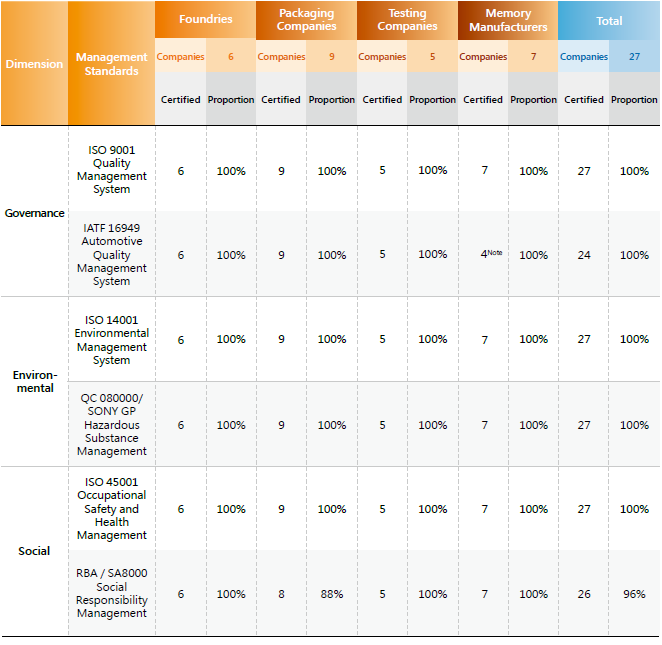
Note: Excludes three design companies where IATF 16949 is not applicable.
- Key Supplier ESG Risk Assessment Results in 2025
Realtek assigned a weighted score to the three dimensions of ESG and evaluated suppliers based on ESG certification obtained. Suppliers were classified into three levels: Green (80-100 points), Yellow (60-79 points), and Red (59 or below). If a Key Supplier is rated Yellow, Realtek actively provides guidance and assistance to help drive improvements and, where appropriate, offers professional resources; a Red rating will affect our evaluation of whether to continue the business relationship. In the 2025 assessment, all 27 Key Suppliers were rated Green, with no suppliers receiving Yellow or Red (failing) lights. Furthermore, none of our other suppliers had their business relationship terminated in 2025 due to failing the assessment. Overall ESG risk assessment results were satisfactory, with no suppliers identified as having a negative impact on corporate governance, environmental, or social aspects, reflecting the stable performance of our supply chain. To ensure the effectiveness of social responsibility governance in the supply chain, we continue to use the “Labor and Ethical Management Questionnaire” to monitor suppliers that have not yet obtained RBA/SA8000 certification, helping us identify their risk profiles and management maturity. Regarding RBA / SA8000 social responsibility performance, by maintaining rigorous oversight and compliance requirements in 2025, the overall compliance rate increased to 96% (up from 86% in 2024). This demonstrates the continuous enhancement of supply chain social responsibility governance, which aligns with company standards and customer expectations. In addition, the suppliers' compliance rate for ISO 45001 (occupational health and safety management) also rose to 100% (up from 93% in 2024), further reflecting the continuous strengthening of the supply chain's overall performance in workplace safety and employee health management.
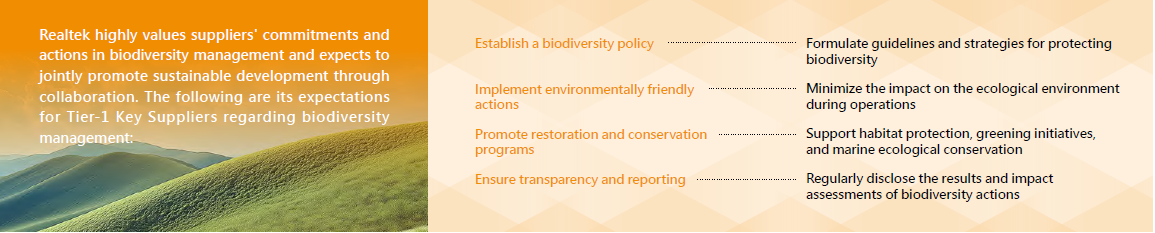
To deepen its environmental responsibility and protect ecosystems, Realtek integrated biodiversity management assessments into surveys for its Tier-1 Key Suppliers. In addition to referencing the GRI 101 Biodiversity Standard, the Company also takes into account the biodiversity-related risk and impacts highlighted by international initiatives, such as the Taskforce on Nature-related Financial Disclosures (TNFD) and the Kunming–Montreal Global Biodiversity Framework. According to these frameworks, corporate impacts on biodiversity encompass not only habitat and species conservation, but also water use, pollution emissions, land use, and natural resource management. In alignment with these principles, Realtek has incorporated environmental management systems, natural resource management, and environmental impact control into its supply chain biodiversity management scope. This aims to strengthen suppliers' identification and management of their impacts on the natural environment. The 2025 survey results indicate that all eight Tier-1 Key Suppliers had established environmental management systems and implemented measures for energy conservation, carbon reduction, water resource management, or environmental protection. Therefore, 100% of Tier-1 Key Suppliers are already addressing biodiversity-related issues. In addition, some suppliers have further promoted facility greening, ecological landscaping, or habitat protection programs, indicating that the semiconductor supply chain is increasingly prioritizing the natural environment and biodiversity. Realtek will continue to encourage and support suppliers' participation in ecological restoration, tree planting, and carbon reduction initiatives, while regularly reviewing and evaluating their progress. Together with its supply chain partners, Realtek aims to actively protect ecosystems while pursuing growth and development, contributing to a sustainable future.
Key Material Risk Management
Management of Key Materials
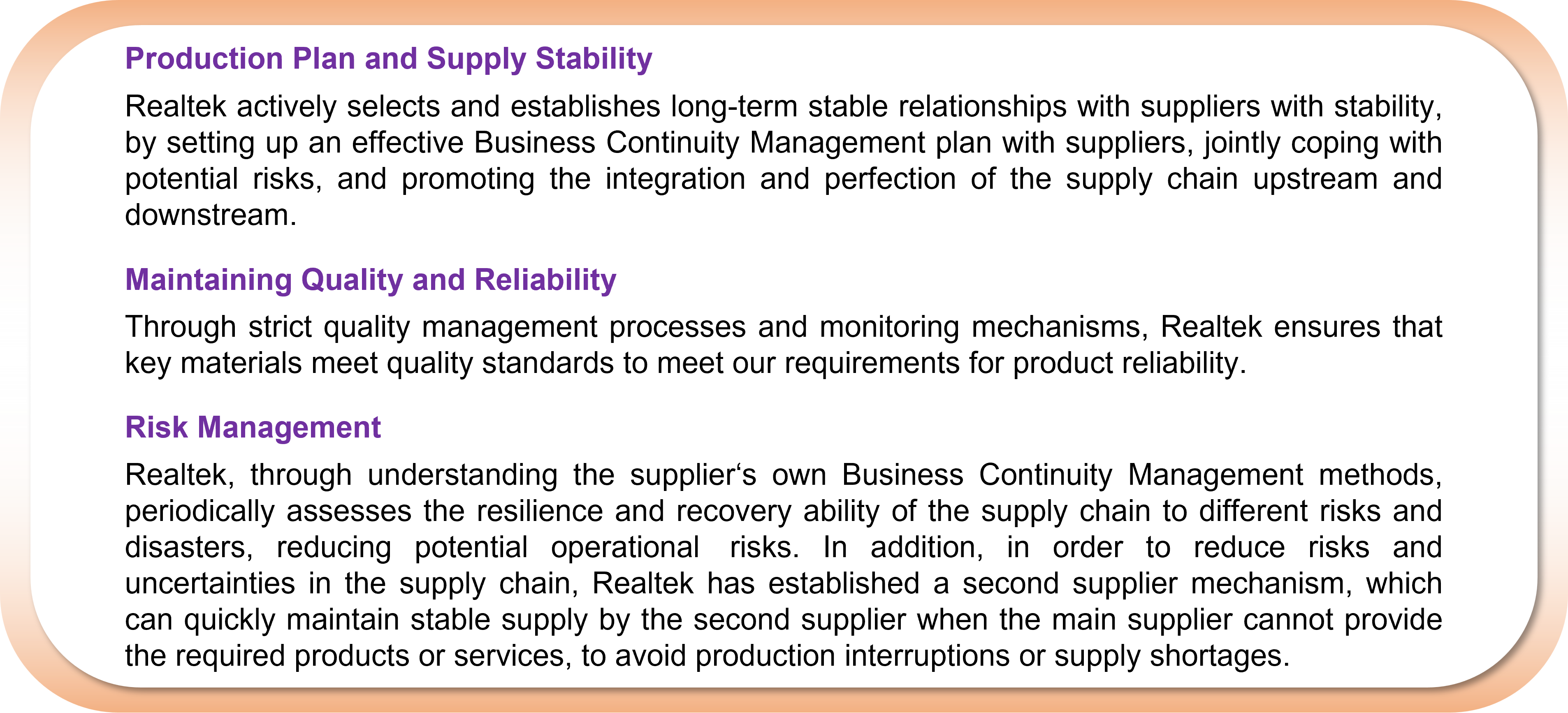
As a key player in upstream IC design within the semiconductor supply chain, Realtek not only continuously mitigates the potential environmental and social impacts of its products through design and technological innovation, but also emphasizes the risk management of critical materials during the manufacturing process. For these critical materials, Realtek strengthens the control of its sourcing and usage through robust supply chain management mechanisms, including conflict minerals due diligence, supplier compliance requirements, and local procurement assessments. By systematically identifying and reducing material-related risks, the Company continuously implements responsible sourcing and drives the development of a sustainable supply chain.
- Supplier's Business Continuity Plan (BCP)
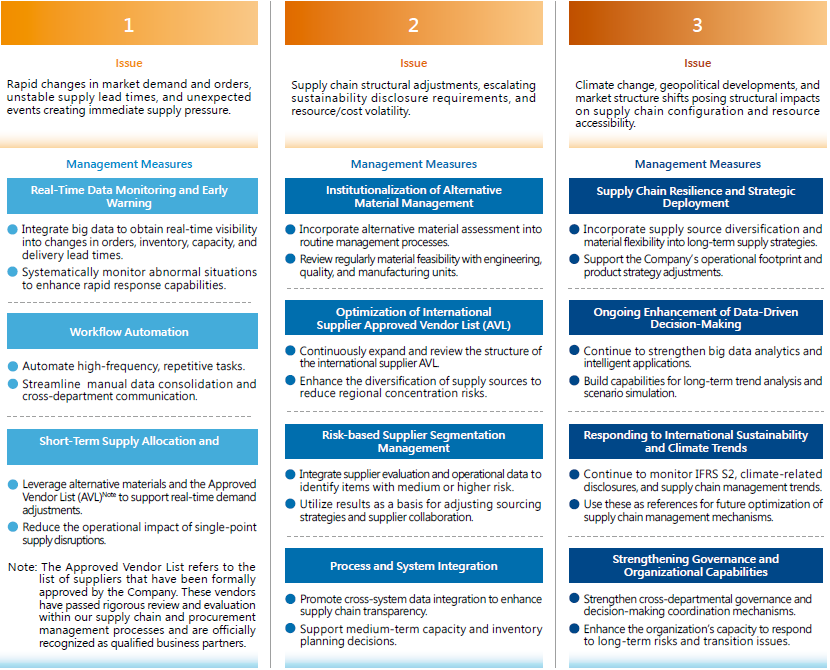
Realtek has established the Realtek Business Continuity Plan and the Foundry & Purchased Equipment & Outsourced Testing Capacity Disaster Recovery Plan. Based on global market supply and demand, the company prevents and assesses the risk of material shortage and strategically adjusts the supply chain layout to ensure the continuous normal operation of the business and the sustainable development of the overall supply chain. At the same time, through a systematic supplier management mechanism, the company stabilizes the raw materials of products to avoid operational impacts caused by delivery delays, ensuring stable customer relationships.
Materials Procurement Issue Analysis and Management Measures
Conflict-Free Mineral Management
- Conflict-Free Mineral Policy
In order to strengthen the human rights management in supply chain, Realtek has required suppliers to sign a Conflict Free Minerals Policy Statement since 2010. Realtek also follows the due diligence procedures outlined by the Organization for Economic Cooperation and Development (OECD) to ensure that the materials used in the products provided by suppliers do not come from conflict-affected and high risk areas (CAHRAs).
Realtek utilizes the Conflict Minerals Reporting Template (CMRT) and the Extended Minerals Reporting Template (EMRT) issued by the Responsible Minerals Initiative (RMI) to continuously conduct due diligence on conflict minerals including tin, tungsten, tantalum, gold, cobalt, and mica. This process ensures that the mineral sources are in compliance with smelters, refiners, or countries recognized by the RMI. Through the automated supplier conflict minerals reporting system, the Company requires suppliers to regularly update their information, enabling responsible departments to effectively access and monitor comprehensive information. In 2025, 100% of the suppliers submitted conflict minerals-related information through the management system in full compliance with RMI requirements. If suppliers fail to complete the required reporting by the deadline, or if their submitted information does not meet the relevant standards, the Company will actively follow up and issue reminders through automated system notifications and direct contact. Where necessary, the Company provides reporting guidance and support to ensure data completeness and compliance. In addition, Realtek proactively joined the Responsible Minerals Initiative (RMI) as a formal member in January 2026. By actively participating in this international initiative and leveraging its management resources, the Company ensures that its products are not manufactured using conflict minerals.
2024 Realtek Conflict-free Mineral Due Diligence Investigation Report (Download)
Supplier Conflict Mineral Reporting System
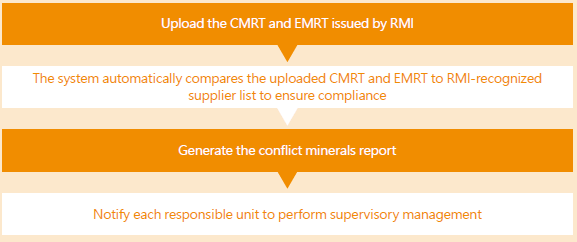
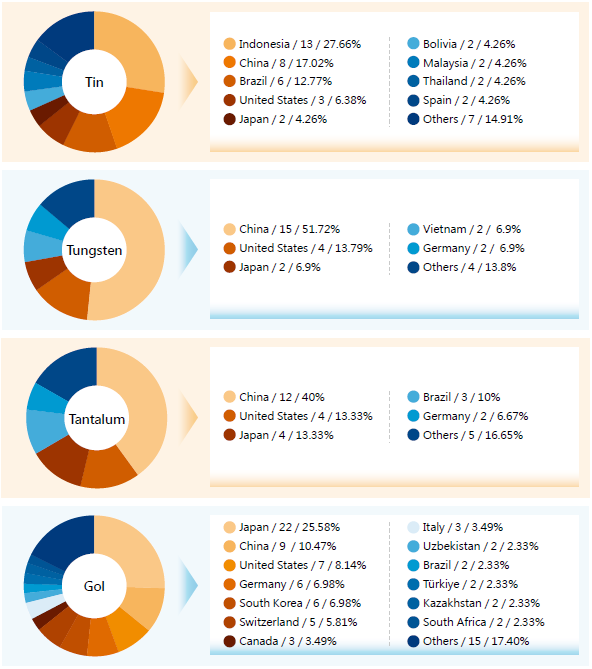
Realtek uses tin, tungsten, tantalum, and gold from 192 smelters in 37 countries. 100% of its suppliers use smelters with RMI certification. The company prohibits minerals from non-government, or illegal military factions in areas or neighboring countries controlled by the Democratic Republic of the Congo. In the future, Realtek will continue to refrain its suppliers from procuring any conflict minerals as part of our commitment to supporting human rights and sustainable operations. This will completely prevent the use of conflict minerals that come from areas associated with serious human rights abuse, illegal trade, or the financing of violence.
CMRT Smelter Ratio
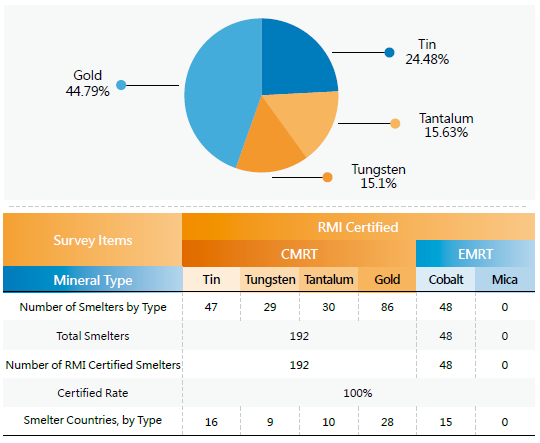
Distribution of the Four Major Mineral Resources in Realtek Products
Promoting Green Supply Chain
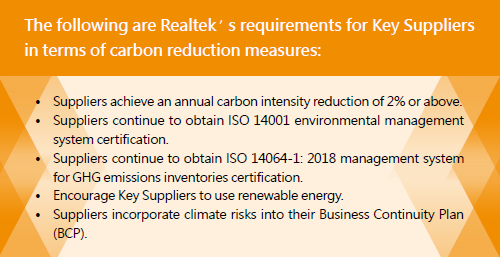
- Carbon Reduction Management of Key Suppliers
Realtek is committed to mitigating the impact of climate change, working with supply chain partners to continuously improve low-carbon operational capabilities. In order to achieve the goal of reducing greenhouse gas emissions, Realtek requires Key Suppliers partners to commit to reducing carbon intensity by at least 2% annually, regularly tracking and reviewing the carbon reduction measures taken by Key Suppliers, and working closely with Key Suppliers to jointly promote the carbon reduction process.
|
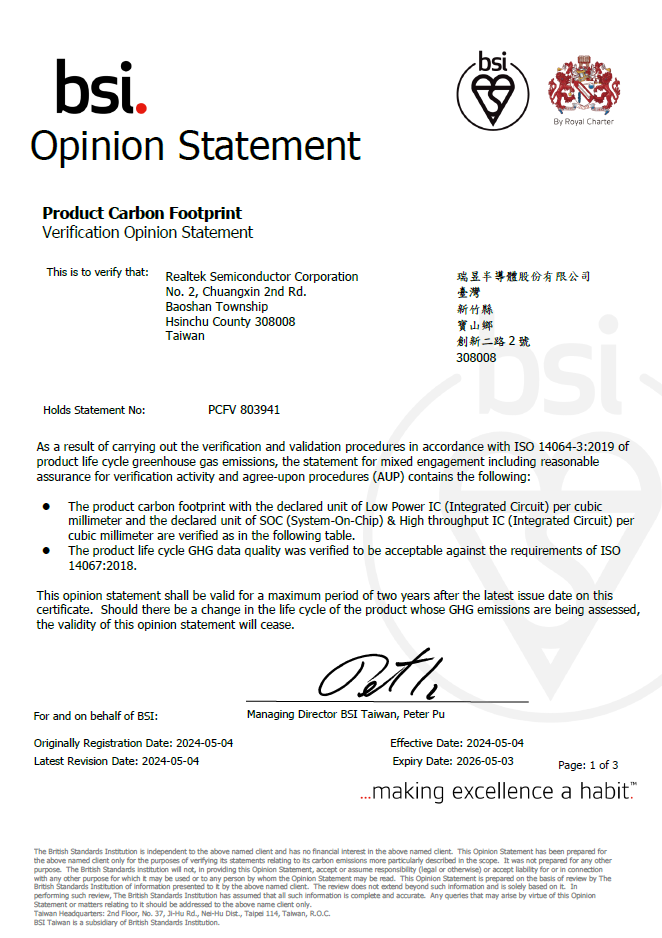
Lifecycle and Product Carbon Footprint In 2024, Realtek fully launched the systematic product carbon footprint modeling and management initiative, covering greenhouse gas emissions across all stages, including raw material procurement, manufacturing, packaging, testing, and transportation. With the guidance of external consultants, the Company obtained a third-party verification statement for the ISO 14067 product carbon footprint covering all products. Entering 2026, Realtek continues to successfully maintain this certification. By accurately identifying carbon emission hotspots across the entire product lifecycle, Realtek collaborates with Key Suppliers to continuously optimize production and supply chain processes. This approach not only meets customer demand for low-carbon products but also drives the semiconductor industry toward a more environmentally friendly and sustainable future. |
ISO 14067 Product Carbon Footprint (Validity Period: 2024.05.04-2026.05.03)
|
|
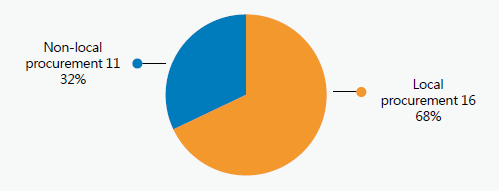
Local Procurement Realtek adheres to the spirit of local procurement, reducing logistics and transportation costs, and reducing carbon emissions from long-distance or air transportation. This also helps to reduce the risks and uncertainties in the supply chain. In 2025, Realtek maintained 68% local procurement across 27 Key Suppliers. |
Realtek 2025 Key Supplier Breakdown by Local Procurement Ratio and Supplier Count
|
- Packaging Recycling
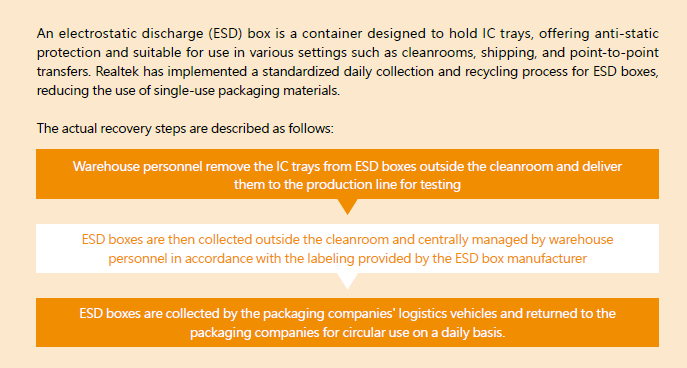
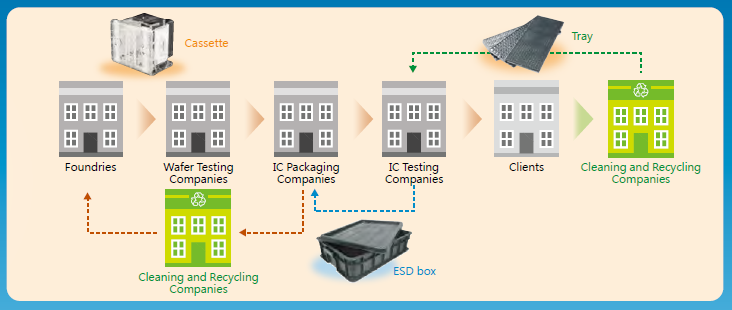
Considering the negative environmental impact of discarded packaging materials, Realtek promotes and implements a circular packaging program for its supply chain. For cassettes, IC trays, and electrostatic discharge (ESD) boxes used to transport semi-finished and finished products, contracted processing suppliers are responsible for coordinating with professional cleaning service companies to collect, clean, and recondition materials. After cleaning, these materials are 100% reused. This practice reduces the use of single-use packaging and proactively prevents waste generation. This initiative reinforces Realtek′s commitment to environmental responsibility and the development of a sustainable, circular supply chain.
|
|
 |
 |
Product Quality Management
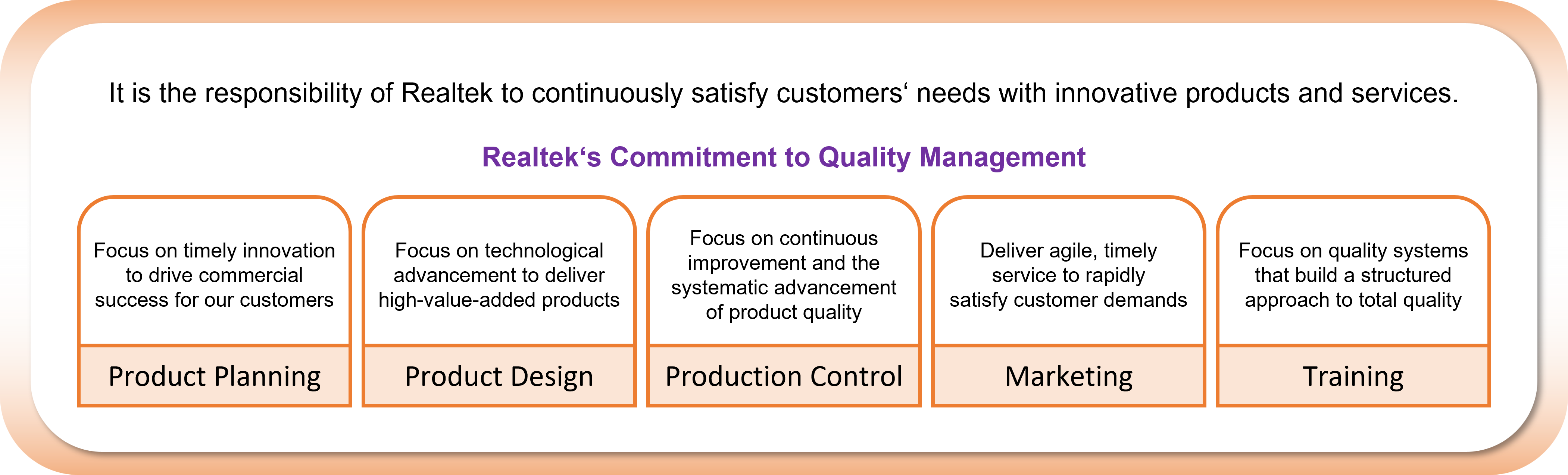
Quality Policy
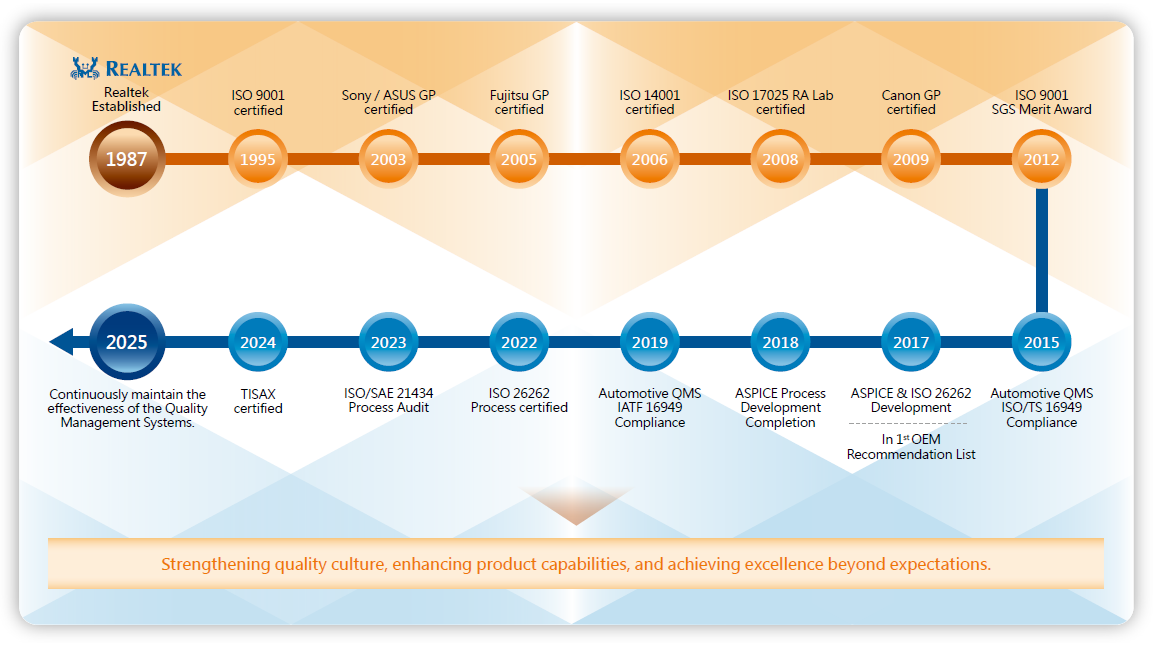
Quality Management System Requirements Milestones
Product Quality and Safety Management
Realtek values the needs and feedback of its customers and has established a rigorous quality management system. In 1995, Realtek led the industry by becoming the first IC design house in Taiwan to achieve ISO 9001 Quality Management Systems certification, and it continues to actively expand product applications and enhance its quality system. In 2008, to enhance the durability and reliability of its IC products, Realtek obtained ISO 17025 Laboratory Quality Management System certification. Through stringent reliability testing procedures and advanced inspection techniques, the company tests and simulates product lifespan under consumer usage scenarios and analyzes their tolerance in extreme environments. The company also conducts comprehensive assessments of the product's performance under various operating conditions. By leveraging these testing procedures and inspection techniques, the company ensures that all products meet the highest quality standards before shipment.
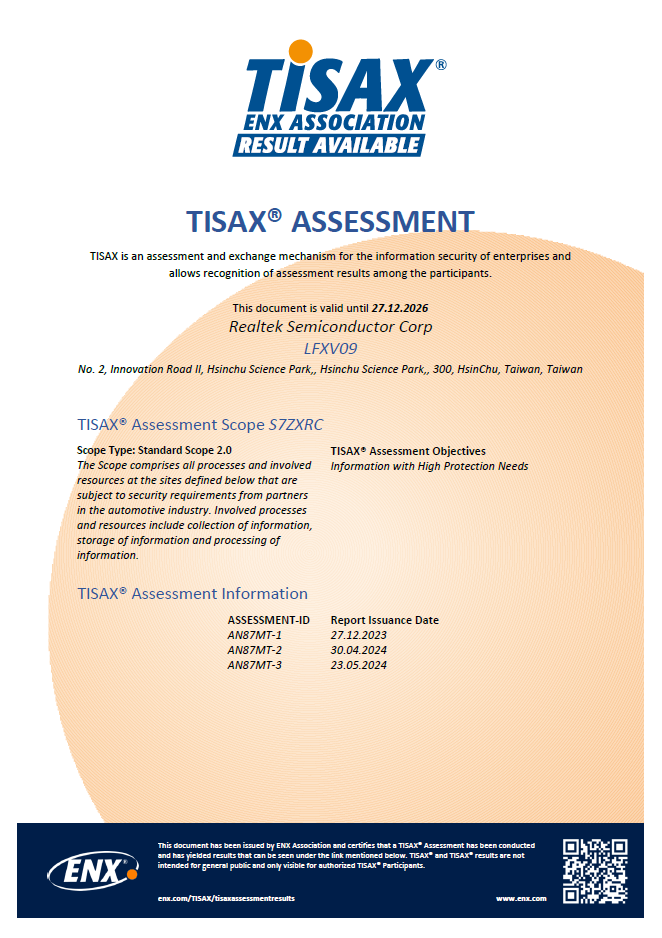
Since 2015, Realtek has consistently planned and implemented various quality management systems and processes to meet the application requirements of products across different fields. The Company places strong emphasis on safety, environmental protection, and user health throughout the product design and development stages. For example, in the case of automotive products with exceptionally high safety standards, Realtek has obtained ISO 26262 certification for functional safety in road vehicles, passed the external audit of the IATF 16949 Automotive Quality Management Systems, and achieved Automotive SPICE (ASPICE) compliance for embedded software development. In 2024, Realtek further obtained TISAX (Trusted Information Security Assessment Exchange) and ISO/SAE 21434 Cybersecurity Engineering certifications, along with ISO 13485:2016 certification for Medical Device Quality Management Systems. The Company will continue to deepen its R&D efforts and rigorously implement quality management practices to ensure that products across all domains consistently maintain the highest quality over the long term. In 2025, Realtek fully complied with all health and safety regulations pertaining to its products and services.
|
|
|
|
|
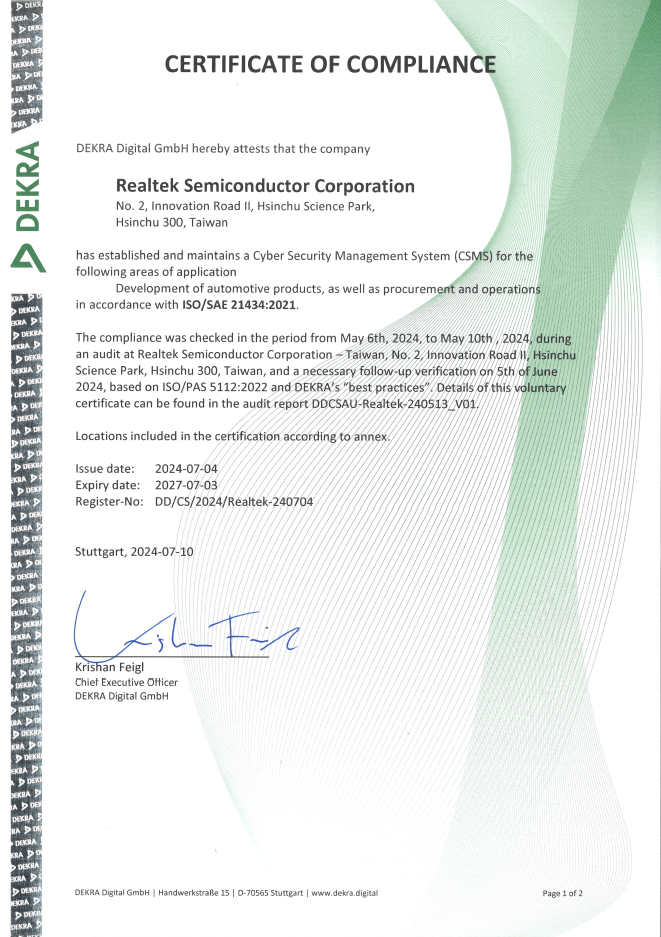
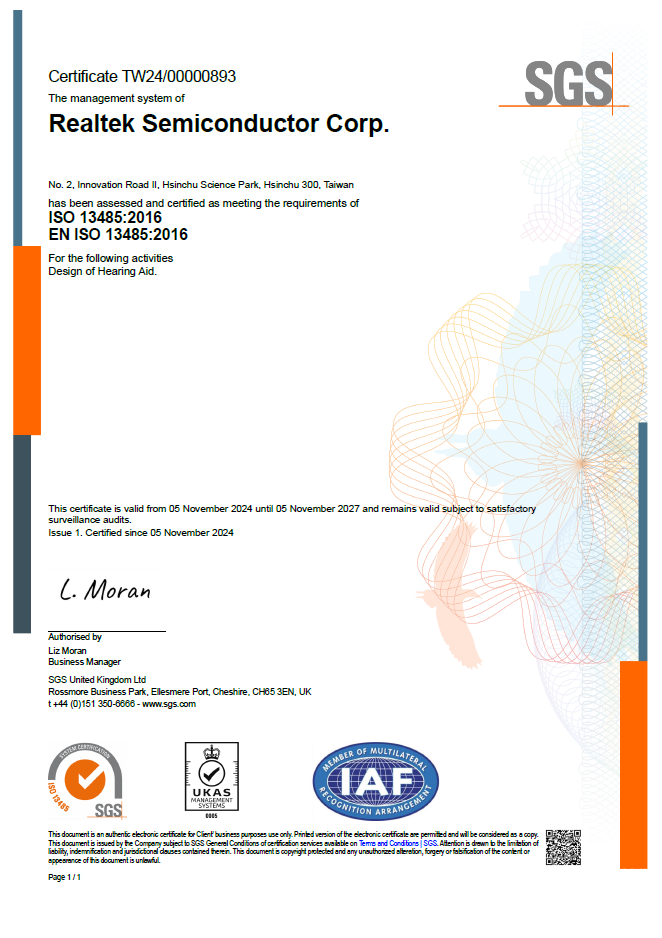
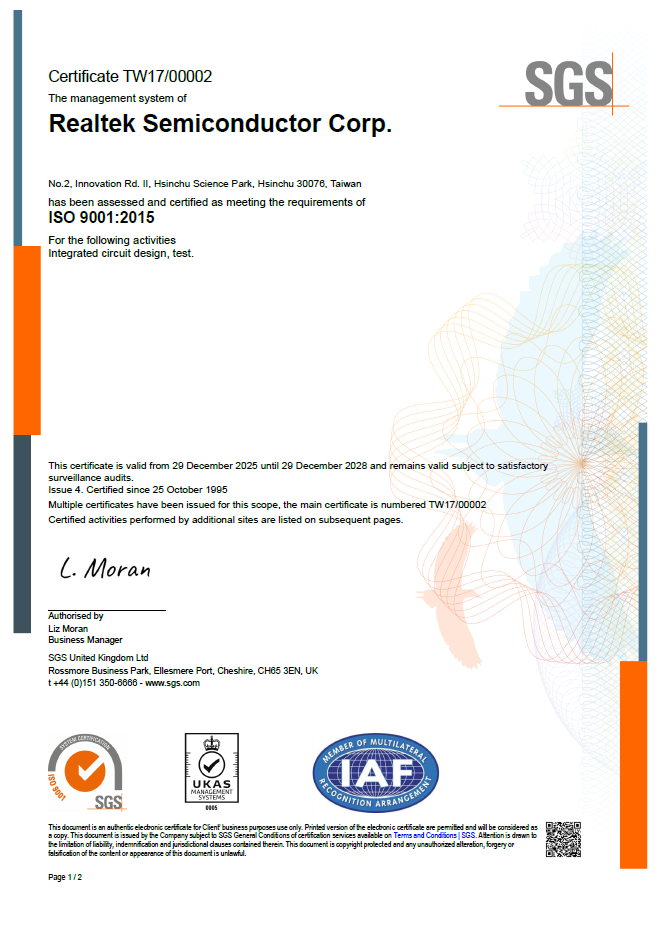
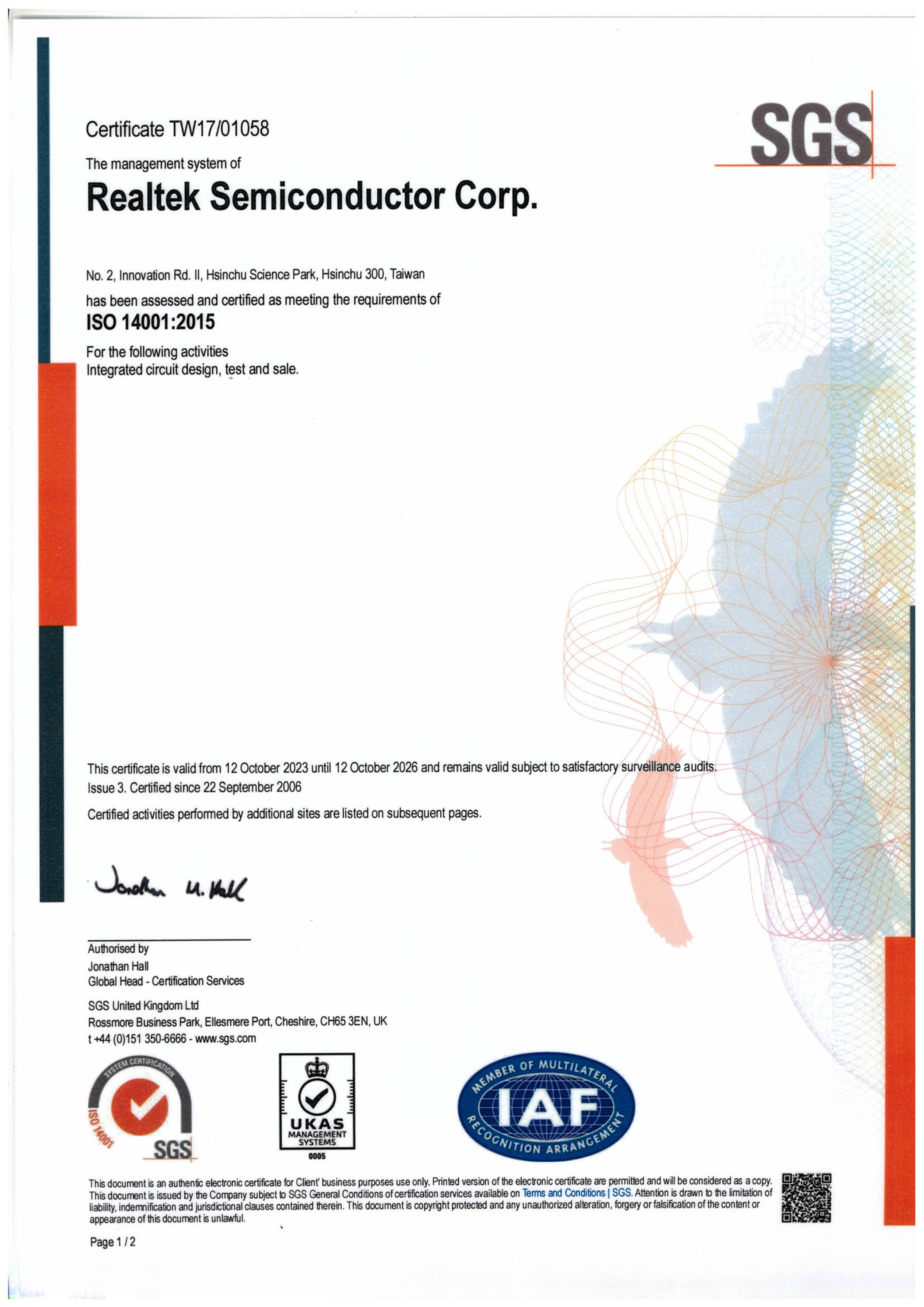
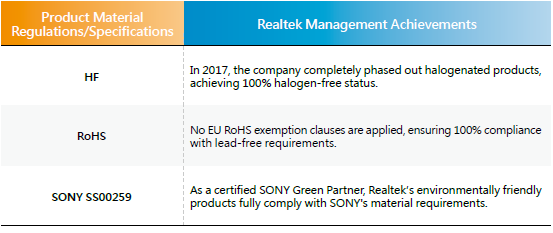
Regarding environmental protection and user health, Realtek sets stringent standards for the raw materials used in production and rigorously adheres to the various environmental and quality requirements established by international initiatives. This approach ensures that its products do not contain components harmful to human health or detrimental to the environment. Realtek maintains the effectiveness of its Environmental Management System (ISO 14001:2015) and continuously enhances the green design of its products across their entire Product Life Cycle to minimize negative environmental impacts and improve overall environmental performance. Furthermore, the Company is committed to complying with international environmental regulations and securing certifications for green raw materials and products. By 2017, Realtek has successfully phased out all halogen-containing products, achieving 100% compliance with leadfree and halogen-free standards, as well as hazardous substance requirements stipulated by the EU and Japan for the electronics industry. The Company also complies with the EU′ s Restriction of Hazardous Substances (RoHS) Directive. Over the past six years, Realtek has not incurred any fines related to violations of hazardous substances in its products.
Customer Relationship Management
Customer Relationship Management: Strategy & Goal
Short-term (1 year)
◆ Achieve a minimum 80% response rate and customer satisfaction level in satisfaction surveys
◆ Maintain 100% response rate for the“ ESG Questionnaire Response Performance Management System”
◆ Continue to develop new products to deepen and broaden relationships with customers and partners
◆ Continue to implement various related quality management systems
◆ Enhance ongoing communication with customers regarding sustainable business development
◆ Collaborate with key customers to assist in integrating product logistics support systems and provide optimal marketing services to build customer trust and fulfill customer needs
Medium- to long-term (2-10 years)
◆ Sustain the response rate and satisfaction level from customer satisfaction surveys reached 80% or higher
◆ Develop AI functionalities for TVs, collaborating with customers to redefine televisions as central hubs for home audio-visual, entertainment, and information
◆ Continuously increase and stabilize product market share while maintaining excellent quality, and establish a global service and technical network
◆ Establish long-term, stable, and mutually beneficial partnerships with customers to achieve diverse and sustainable development
Sustainability Contribution in 2025
◆ Achieved a response rate of 85.7%, with satisfaction levels of 94.4% or higher in the customer satisfaction questionnaire, both meeting the annual targets
◆ Responded to 101 external stakeholders' ESG questionnaires via the dedicated ESG Questionnaire Response Performance Management System, achieving a 100% response rate
◆ Maintained TÜV Nord third-party assessment for the TISAX
◆ Maintained Dekra third-party certification for the Automotive Cybersecurity Engineering Management System (ISO/SAE 21434)
◆ Maintained ISO 13485 certification for the Medical Devices Quality Management System
Customer Relationship Management
Realtek Customer Rights and Interests Policy
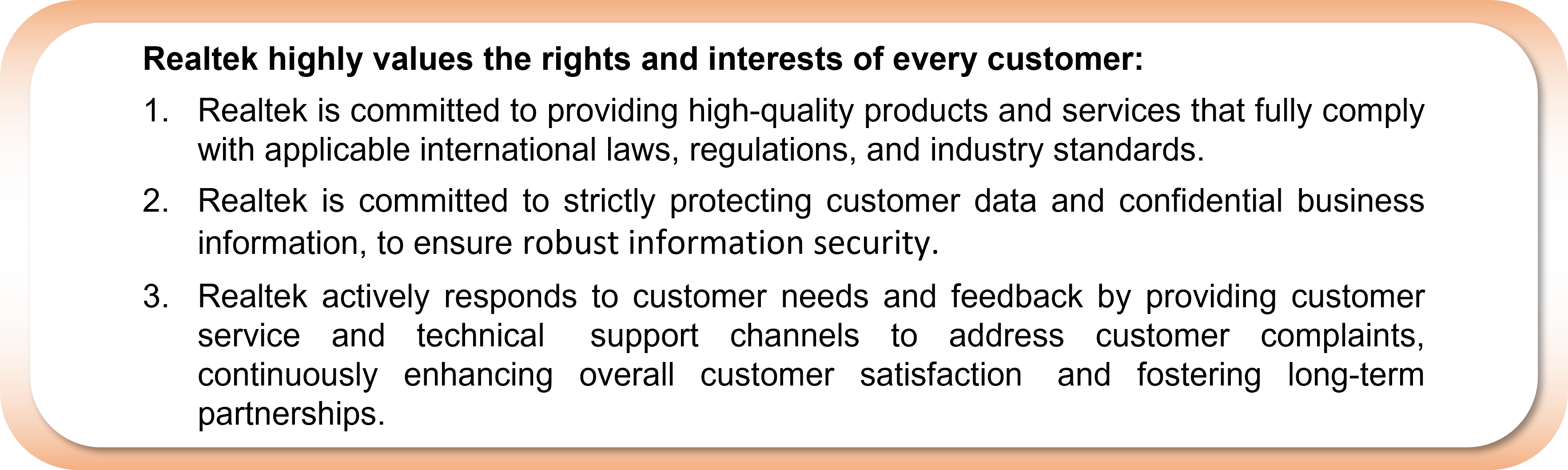
Realtek's Ethical Corporate Management Best Practice Principles incorporate provisions to prevent any harm caused by its products or services to stakeholders, with the goal of safeguarding the rights, health, and safety of consumers and other stakeholders from direct or indirect impact. Customer satisfaction is a crucial foundation for enhancing customer relationships. Realtek listens to and discusses customer needs, expectations, and feedback through online and in-person meetings or visits, engaging in continuous professional communication with customers. The company collects feedback through systematic customer satisfaction surveys, which are carefully reviewed to understand their opinions. The company proactively reaches out to customers to provide explanations and understand the underlying reasons for their feedback, actively grasps customer and market needs, and closely align these insights with its R&D and innovation goals. Furthermore, individualized customer survey reports are generated on a case-by-case basis and submitted to relevant managers for review and approval, serving as a reference for quality enhancement and customer relationship development.
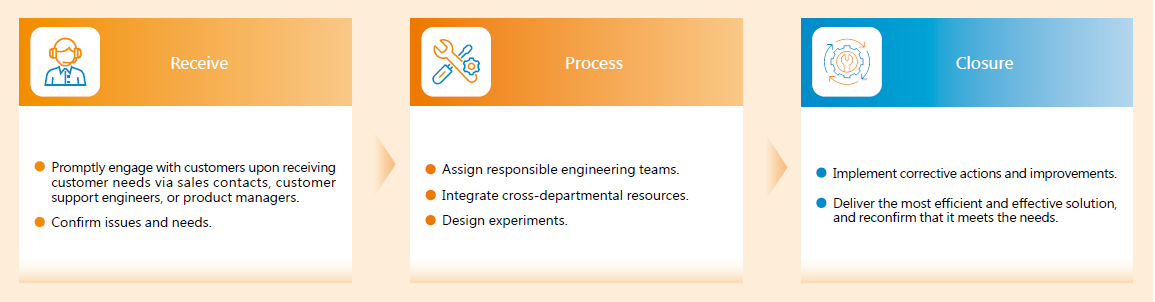
An annual customer satisfaction surveys is conducted to understand customer feedback and requirements for Realtek's products and services. Customer suggestions for product optimization are carefully reviewed, and relevant improvement plans are developed. In 2025, Realtek collected a total of 72 customer satisfaction questionnaires (with a total response rate meeting the annual target of 85.7%), among which 94.4% of customers rated Realtek's overall performance as satisfactory or above. In addition to the satisfaction survey system, customers can also submit their needs and feedback through various channels, such as product technical support mailbox and customer service window. Once the case is filed, Realtek proactively contacts the customer and understands the problem in detail. For technical issues, Realtek assists customers in immediately contacting the global distributors and FAE (Field Application Engineer) resource team to confirm the actual situation of the problem and design experiments. Through cross-departmental collaboration mechanisms, the abnormal conditions on product platforms are discovered in time, and Realtek's professional software and hardware engineering team provide rapid support, gather customer feedback, propose the most effective solutions, and implement corrective actions and improvements.
Moreover, Realtek launched the “ESG Questionnaire Response Performance Management System” in 2023. Through the electronic platform and system database, the ESG Center at Realtek has control over the ESG survey and questionnaire requirements of external stakeholders such as customers and institutional investors. In coordination with various responsible units, the company responds to the questions of stakeholders and promotes sustainable actions. Realtek actively responds to external expectations regarding its sustainable development, identifying material issues and the direction for sustainable business development accordingly. In 2024, Realtek further integrated AI applications into the ESG Questionnaire Response Performance Management System to optimize the efficiency, accuracy, and consistency of responses to external customers. Simultaneously, through gap analysis and tracking and improvement procedures, the Company continuously enhances its sustainable development. In 2025, the Company responded to a total of 101 ESG questionnaire surveys requested by external stakeholders.
Realtek's customer relationship management not only focuses on the promotion of products and technology, but also values the establishment of long-term, robust, and mutually beneficial relationships. Through effective communication and interaction, the Company collaborates with customers to explore corporate social responsibility initiatives and market opportunities, jointly realizing a diverse and sustainable future.
- Customer Relationship Management / Complaint Handling Process
Product Return, Replacement, and Complaint Handling Mechanisms
To ensure product quality while maintaining a high standard of customer service, Realtek has established comprehensive product return, replacement, and complaint handling mechanisms as a key component of its sustainable value chain. If issues such as compatibility concerns, inventory allocation/logistical issues, insufficient testing, or other factors affecting normal product use arise during customer usage, the Company will, upon mutual confirmation, initiate Return Merchandise Authorization (RMA) procedures in accordance with established processes to promptly respond to customer needs and minimize operational impacts.
Regarding customer complaints and feedback, Realtek has established clear communication channels and internal coordination mechanisms. Relevant units are responsible for case handling, root cause analysis, and followup improvements, while cross-functional collaboration ensures effective resolutions and timely responses. Insights and feedback are further integrated into product design, testing, and quality management processes, serving as a key foundation for the continuous improvement of products and services.
Through systematic return, replacement, and complaint handling mechanisms, Realtek not only reduces product risks and quality disputes but also strengthens long-term customer relationships. This demonstrates a strong commitment to product responsibility, service quality, and customer trust, while continuously enhancing the stability and reliability of its overall sustainable value chain. In addition, Realtek recorded ZERO product recalls in 2025, indicating that its quality management and customer feedback mechanisms are highly effective in risk prevention and control.